Introduction
Dark clouds gathered over Lindisfarne monastery on June 8, 793 CE, as northern raiders struck with terrifying violence. These seafaring warriors from Scandinavia would reshape European history, leaving behind tales of brutality and sophistication that continue to captivate us today. From their shipbuilding mastery to their complex society, Vikings were far more than the bloodthirsty barbarians of legend. This article uncovers the truth behind the myths, exploring the secrets of Norse life, their legendary raids, and the warrior culture that defined an era.
Background: The Origins of the Viking Age
The Viking Age began in 793 CE with the infamous raid on Lindisfarne monastery in northeastern England, though Norse seafaring traditions existed long before. These Scandinavian warriors hailed primarily from modern-day Norway, Sweden, and Denmark, countries formed from fragmented kingdoms constantly competing for resources and power. Scandinavian historian Else Roesdahl notes that "the Viking expansion was not merely about raiding; it was about exploration, trade, and establishing new societies across distant lands."
Several factors sparked this explosion of Norse activity. Climate change, improving farming conditions, and population growth created pressure for new lands. Technological advances in shipbuilding, particularly the development of the longship with its shallow draft and symmetrical design, enabled unprecedented maritime capabilities. These versatile ships could navigate oceans, rivers, and even portage across land—giving Vikings access to regions previously considered unreachable. Political centralization in Scandinavia also meant that younger sons, often excluded from inheritance, sought their fortunes abroad.
Norse society was structured hierarchically, with kings, jarls (aristocrats), karls (free farmers and traders), and thralls (slaves). Unlike the feudal systems emerging in Europe, Norse women enjoyed relatively high status, could manage farms during their husbands' absences, and occasionally participated in raids. This complex social system produced not just warriors but skilled craftsmen, traders, poets, and lawmakers who would leave their mark across the known world.
Key Events: Raids That Shaped History
The raid on Lindisfarne marked only the beginning of Norse expansion throughout Europe. In 845 CE, Viking leader Reginherus (possibly the legendary Ragnar Lothbrok) sailed up the Seine with 120 ships and 5,000 men, besieging Paris and extracting over 7,000 pounds of silver and gold as ransom. The Great Heathen Army of 865 CE, led by the sons of Ragnar Lothbrok, changed the strategic landscape entirely by transitioning from seasonal raids to permanent conquest. This force of thousands captured York in 866 CE, establishing the Viking kingdom of Jorvik that would control much of northern England for nearly a century.
Beyond England, Norse influence extended dramatically. In 911 CE, Viking leader Rollo was granted lands in northern France by King Charles the Simple, creating the region that became Normandy. His descendants would later conquer England in 1066 under William the Conqueror, though by then they had fully integrated into French culture. To the west, Norwegian Vikings discovered Iceland around 874 CE, with Erik Thorvaldsson (Erik the Red) establishing the first Greenland settlement around 985 CE after being exiled from Iceland for manslaughter.
Perhaps most remarkably, Viking explorers reached North America nearly five centuries before Columbus. Leif Erikson, son of Erik the Red, led an expedition to a land he called "Vinland" around 1000 CE, establishing a short-lived settlement at L'Anse aux Meadows in present-day Newfoundland, Canada. Archaeological evidence confirms this Norse presence, including distinct Viking-style buildings and butternuts, which don't grow naturally that far north. These achievements highlight the Vikings' exceptional shipbuilding and navigational skills that made them the most far-reaching explorers of their age.
Surprising Facts About Norse Society
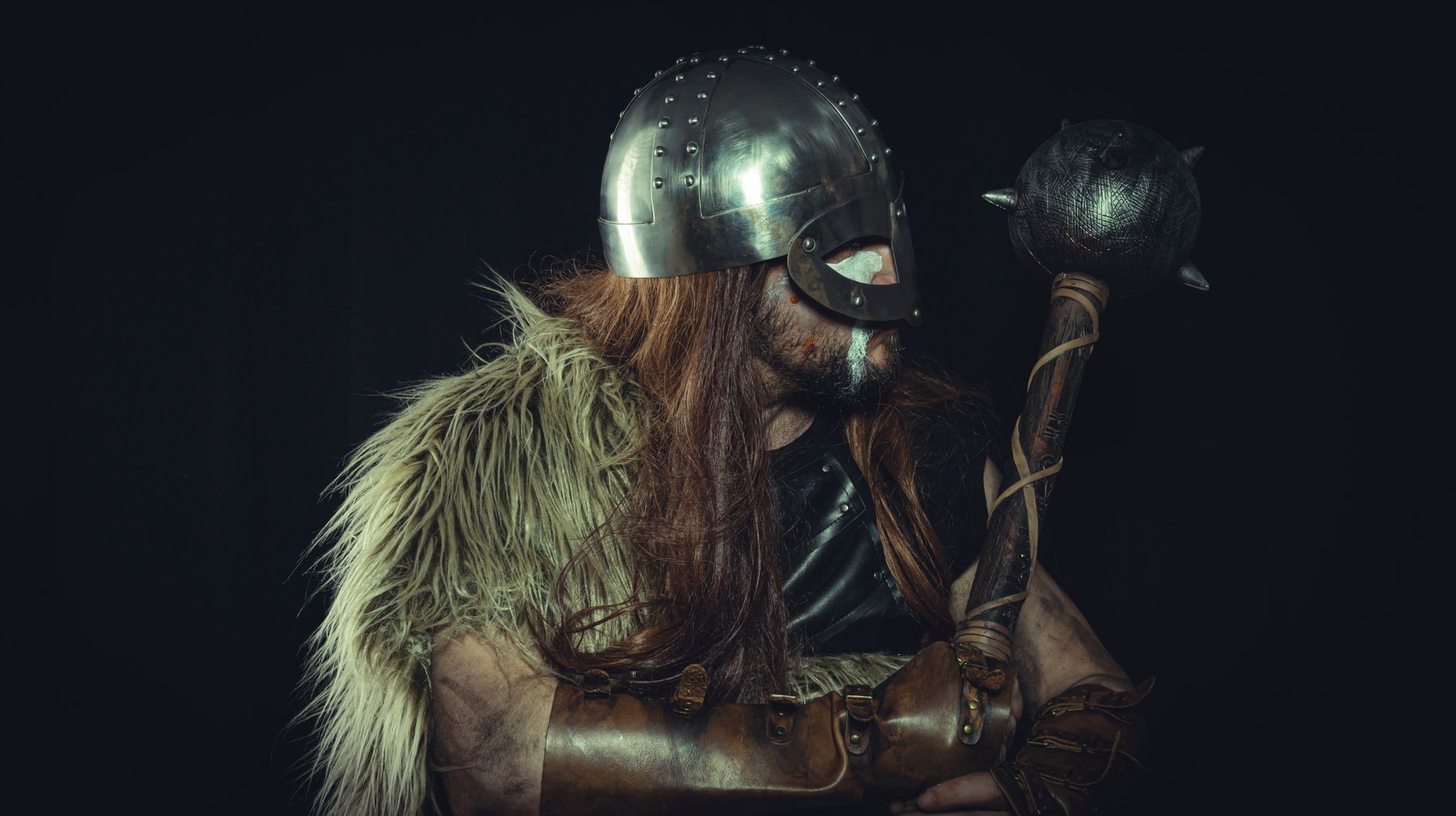
Contrary to popular belief, Vikings didn't wear horned helmets—this misconception originated from 19th-century opera costumes, not historical evidence. Archaeological finds reveal they favored simple, practical helmets, sometimes with face guards but never horns. Another common misunderstanding involves Viking hygiene; they actually maintained better grooming habits than many contemporary Europeans. Archaeological excavations have yielded tweezers, razors, combs, and ear cleaners, suggesting they bathed regularly and took pride in their appearance. Arab travelers like Ibn Fadlan notably recorded Norse men washing daily and changing clothes—unusual practices for the time.
Viking society relied heavily on trade, not just raiding. Their extensive trade networks connected Scandinavia with the Byzantine Empire, the Abbasid Caliphate, and distant Asia. Norse merchants exchanged furs, amber, walrus ivory, and slaves for silver, silk, spices, and glass beads. The Viking city of Hedeby in modern Germany was one of northern Europe's most important trading hubs, with goods from across the known world passing through its markets. Economic activity, not仅仅是 violence, drove much Norse expansion.
The concept of "going Viking" was often a seasonal activity for young men seeking to prove themselves and accumulate wealth, after which they might return home to farm or trade. Norse law was remarkably sophisticated, with legal assemblies called Things serving as both courts and legislative bodies. These gatherings, presided over by law speakers, settled disputes and established community rules through democratic processes rather than pure autocracy. The most famous of these, Iceland's Althing established in 930 CE, is one of the world's oldest parliamentary institutions.
Impact and Legacy of the Viking Age
The Viking Age fundamentally reshaped the political and cultural map of Europe. In England, Norse influence left permanent marks on the English language, with over 1,500 words of Old Norse origin still in use today, including "sky," "egg," "window," "husband," and even the word "law." This linguistic exchange occurred during the Danelaw period, when Norse settlers controlled much of northern and eastern England. Many towns with names ending in "-by" (farm) or "-thorpe" (village) in England reflect Viking settlement patterns, as do countless others ending in "-thwaite" (clearing) and "-kirk" (church).
Viking presence also transformed the political landscape of Ireland and Scotland. Waterford, Dublin, Wexford, Cork, and Limerick began as Norse settlements before becoming major Irish cities. Norse-Gaelic kingdoms emerged, blending Viking and Celtic cultures. In Scotland, the Kingdom of the Isles, ruled by Norse-Gaelic kings, controlled much of the western coast and islands for centuries. Even the remote Orkney and Shetland islands remained under Norse control until the 15th century, retaining a strong Norse linguistic influence seen today in local dialects.
The Normans—descendants of Viking settlers in northern France—carried Viking expansion to new heights. By 1066, when William the Conqueror invaded England, cultural assimilation had transformed them into continental warriors, though they maintained the Norse spirit of adventure and conquest. This Viking legacy shaped medieval warfare, feudal systems, and aristocratic structures across Britain and parts of the Mediterranean. The genetic imprint of Viking expansion remains visible today in DNA studies across the British Isles and other regions of northern Europe.
Why This Still Matters Today
The Viking Age represents perhaps the earliest example of globalization, demonstrating how exploration, trade, and cultural exchange can connect distant societies. Their legacy reminds us that mobility, adaptability, and technological innovation aren't merely modern phenomena—humanity has always pushed boundaries and sought new horizons. As globalization faces contemporary challenges, the Viking experience offers valuable lessons about cultural integration, adaptation, and the complex consequences of cross-cultural contact.
Viking values persist subtly in modern democratic traditions, respect for legal processes, and even in contemporary notions of gender equality. Their maritime achievements influenced modern shipbuilding and navigation techniques that later explorers would build upon. The contemporary resurgence of interest in Norse mythology, as seen through popular culture and media, reflects our ongoing fascination with these complex figures who balanced ferocity with artistry, violence with poetry, and ruthlessness with remarkable social sophistication.
Quick Facts
- The Viking Age began with the Lindisfarne raid on June 8, 793 CE
- Vikings reached North America around 1000 CE, nearly 500 years before Columbus
- The Great Heathen Army invaded England in 865 CE with over 3,000 warriors
- Norse law assemblies called Things operated with democratic principles as early as the 9th century
- L'Anse aux Meadows in Newfoundland is the only confirmed Viking settlement in North America
- Approximately 6% of people in the UK have Viking DNA according to genetic studies
Conclusion
The Viking Age represents far more than tales of ruthless raiders and horned helmets. Our understanding has evolved dramatically through archaeological discoveries and historical research, revealing a sophisticated society of traders, explorers, lawgivers, and craftsmen. Their legacy lives on in language, place names, genetic heritage, and cultural traditions across Europe and beyond. This complex civilization emerged from the harsh landscapes of Scandinavia to reshape the medieval world and leave an indelible mark on history that continues to fascinate us today. What aspects of Viking culture do you find most surprising given the common stereotypes that persist in popular culture?