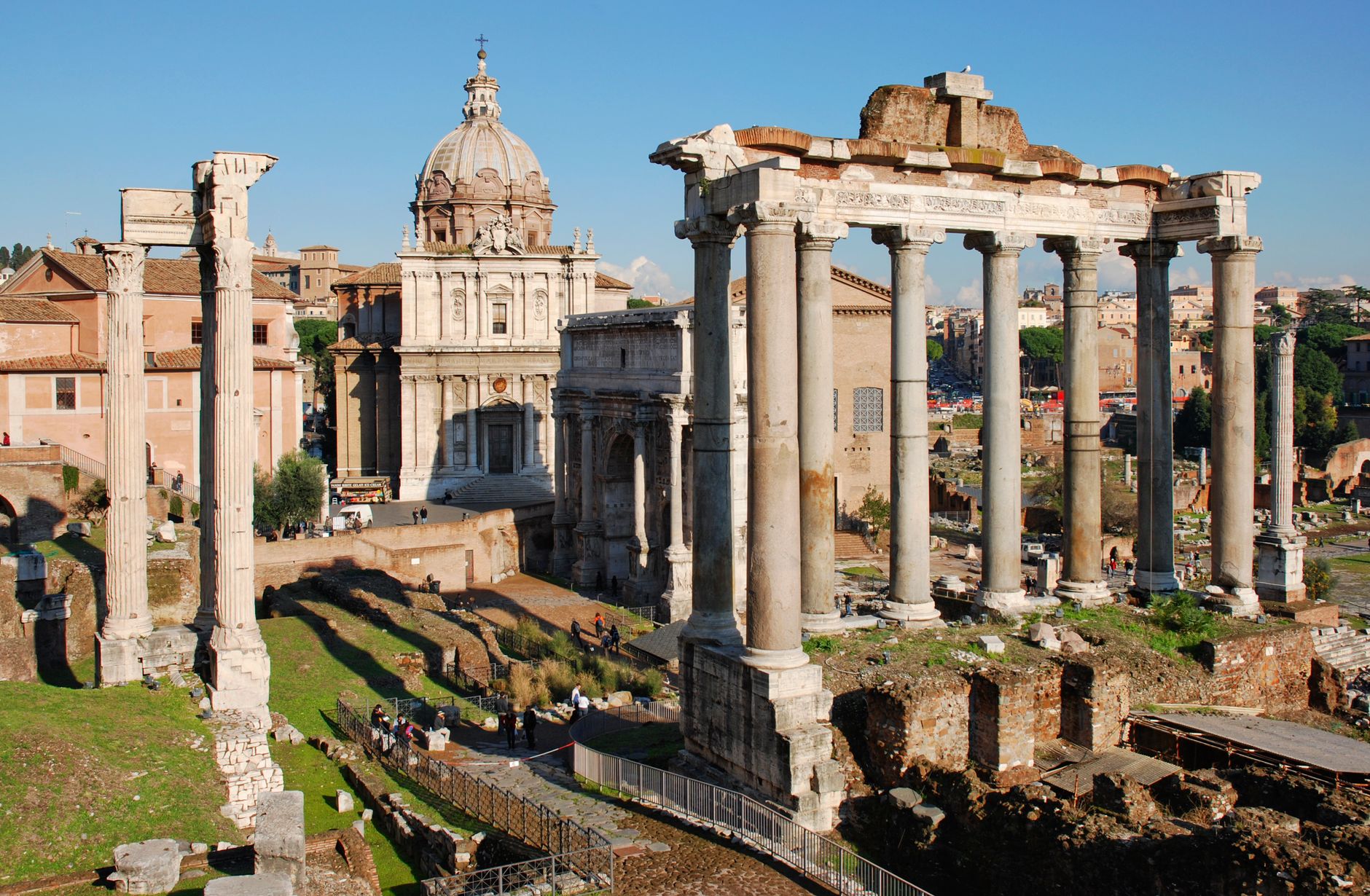
Rome wasn't built in a day, and it didn't fall in one either. This article explores the Roman Empire fall: facts about why it happened — history explained beyond oversimplified theories. We'll uncover the complex web of economic, political, military, and social factors that led to one of history's most significant collapses, separating myth from reality along the way.
Background and Origins
The Roman Empire reached its territorial peak under Emperor Trajan in 117 CE, spanning from Britain to Mesopotamia. However, signs of strain appeared as early as the 3rd century, with the Crisis of the Third Century (235-284 CE) marking the beginning of serious troubles. Emperor Diocletian attempted to stabilize the empire through administrative reforms, including the famous Tetrarchy in 293 CE, which divided power among four emperors.
By the 4th century, Emperor Constantine further altered Rome's trajectory by moving the capital eastward to Constantinople in 330 CE. This decision planted the seeds for what would eventually become a de facto split between the Eastern and Western halves of the empire. "The division of the empire into two parts was both a symptom of decline and a desperate attempt to preserve Roman power," noted historian Edward Gibbon in his seminal work "The History of the Decline and Fall of the Roman Empire."
The Western Roman Empire, based in Rome and later Ravenna, faced particular challenges. Its economy strained under the weight of maintaining vast frontiers, its political system degenerated into near-constant civil war, and its citizenry's loyalty to Roman identity weakened. The empire that had once dominated the Mediterranean world was increasingly fighting to maintain control of its core territories, setting the stage for the dramatic events that would bring about its end.
Key Events and Core Story
The traditional date marking the fall of the Western Roman Empire is September 4, 476 CE, when the Germanic chieftain Odoacer deposed the last Western emperor, Romulus Augustulus. However, this moment was merely the final act in a centuries-long decline. The sack of Rome by Visigoths under Alaric in 410 CE had already sent shockwaves through the ancient world, signaling the empire's vulnerability.
The Visigoths weren't isolated invaders but former federates—barbarian groups that had been allowed to settle within Roman borders in exchange for military service. The treatment of these peoples, combined with economic exploitation, created a dangerous dynamic. "The empire destroyed itself by its own greed and mismanagement of the very people it needed to defend itself," notes Professor Peter Heather in "The Fall of the Roman Empire."
Attila the Hun's devastating campaigns (434-453 CE) further destabilized the region, pushing various Germanic tribes into Roman territory. The Vandals' sack of Rome in 455 CE was even more destructive than the Visigoths' earlier attack. These combined pressures crushed the Western Empire's administrative and military capacity. Following Romulus Augustulus's deposition, Odoacer refused to claim the title of emperor, instead returning the imperial regalia to Constantinople and ruling as "King of Italy" in technically the name—but not the authority—of the Eastern emperor.
The Eastern Roman Empire, however, survived and thrived for nearly another millennium as the Byzantine Empire. This stark contrast between the two halves highlights that the "fall of Rome" wasn't an inevitable collapse but a specific outcome of the Western Empire's particular challenges. The preservation of Roman institutions in the East suggests that with different choices, the West might have endured in some form as well.
Surprising Facts Most People Don't Know
Many believe the Roman Empire ended completely in 476 CE, but the Eastern half (Byzantine Empire) continued until 1453 CE—a span of a thousand years beyond Western Rome's fall. Emperor Justinian I even briefly reconquered Italy in the 6th century. The continuation of Roman law, administration, and culture in Constantinople challenges the narrative of a total collapse.
Climate change likely contributed to Rome's fall. Recent research using tree rings and ice cores indicates periods of dramatic cooling and drought that may have disrupted agriculture and pushed barbarian tribes to migrate into Roman territory. These environmental factors, largely overlooked by traditional historians, combined with political and economic problems to create a cascading crisis.
Lead poisoning theories have gained attention but remain controversial. While Romans used lead extensively in plumbing, cookware, and even as a sweetener, modern archaeology suggests the impact on the population's health and cognitive abilities may have been overstated. The elite, who consumed more lead-sweetened food and wine, had lower life expectancy, but the broader population's health was more affected by malnutrition and disease.
Perhaps most surprisingly, many Romans didn't perceive the "fall" as we understand it today. Rather than a traumatic end, the transition from Roman rule to barbarian kingdoms was often gradual, with many structures of power remaining intact under new leadership. As historian Chris Wickham argues in "The Inheritance of Rome," the transformation represented a shift in power structures rather than the complete disappearance of Roman influence.
Impact and Legacy
The fall of the Western Roman Empire created a political vacuum in Western Europe that would define the medieval period. Local Roman elites increasingly identified with Germanic kingdoms as Roman central authority diminished. The Catholic Church preserved many aspects of Roman culture while becoming a powerful institution in its own right, ultimately crowning Charlemagne as "Emperor of the Romans" in 800 CE.
Roman law formed the foundation for many European legal systems, particularly through the Corpus Juris Civilis commissioned by Emperor Justinian in the 6th century as part of the continuing Eastern Roman Empire. This compilation of Roman legal principles later influenced the development of civil law traditions across Europe, and through European colonialism, legal systems worldwide.
The architectural legacy of Rome persisted through the Middle Ages and Renaissance, with later builders incorporating Roman techniques and aesthetic principles. Infrastructure developments such as roads, bridges, and aqueducts set technical standards that wouldn't be matched until modern times. The idea of Rome continued to inspire political leaders, from Napoleon to Mussolini, who consciously evoked Roman imagery to lend legitimacy to their rule.
Perhaps most significantly, the fall of Rome established a powerful narrative in Western culture about the fragility of civilization. This narrative continues to influence how we think about the rise and fall of powers, providing both cautionary tales and frameworks for analyzing contemporary challenges. The very way we conceptualize historical periods—classical, medieval, modern—originates in this transformative era.
Why This Still Matters Today
The economic challenges that contributed to Rome's fall—debasing currency, unsustainable taxation of the middle class, and extreme wealth inequality—mirror modern economic debates. As political scientist Peter Turchin notes in "End Times," historical patterns of societal instability often recur when inequality exceeds certain thresholds, suggesting today's policymakers would be wise to study Rome's fiscal decline.
The Roman experience with integrating diverse peoples offers lessons for contemporary multicultural societies. While Rome ultimately struggled to maintain social cohesion, its centuries of managing a diverse empire demonstrate both the possibilities and limitations of creating unity out of diversity—a lesson relevant to our increasingly globalized world.
The tension between professional military elites and civilian control in the late Roman Empire finds echoes in modern civil-military relations. As Rome relied increasingly on mercenaries and foreign troops who owed primary loyalty to their commanders rather than the state, it's worth remembering how military professionalization can undermine democratic institutions when not carefully balanced.
Finally, the environmental dimensions of Rome's fall remind us that climate change has historically shaped human civilizations. As we face our own climate crisis, understanding how past societies adapted—or failed to adapt—to environmental changes helps us better appreciate the relationship between ecological stability and political order.
Quick Facts
- The Western Roman Empire officially fell on September 4, 476 CE when Odoacer deposed Emperor Romulus Augustulus.
- At its peak under Emperor Trajan in 117 CE, the Roman Empire controlled approximately 5 million square kilometers and had a population estimated at 60-70 million.
- Inflation under Emperor Diocletian saw prices increase by up to 1,000%, necessitating the Edict on Maximum Prices in 301 CE.
- The Roman military at its height consisted of 300,000-400,000 soldiers, including both legionaries and auxiliaries.
- The Eastern Roman Empire (Byzantine Empire) survived another 1,000 years until its fall to Ottoman Turks in 1453.
- Recent scientific research indicates significant climate cooling and drought between 250-550 CE, contributing to migration pressures on Rome's borders.
Conclusion
The fall of the Roman Empire wasn't a single event but a centuries-long process driven by economic collapse, political instability, military challenges, environmental changes, and shifting social structures. What makes Rome's decline so fascinating—and valuable to study—is how it represents both a cautionary tale about the fragility of civilizations and a testament to the enduring influence of a culture that never truly disappeared. As we navigate our own era of political and economic uncertainty, might our civilization be experiencing its own version of Rome's slow transformation? What aspects of our world would survive a similar collapse?