Introduction
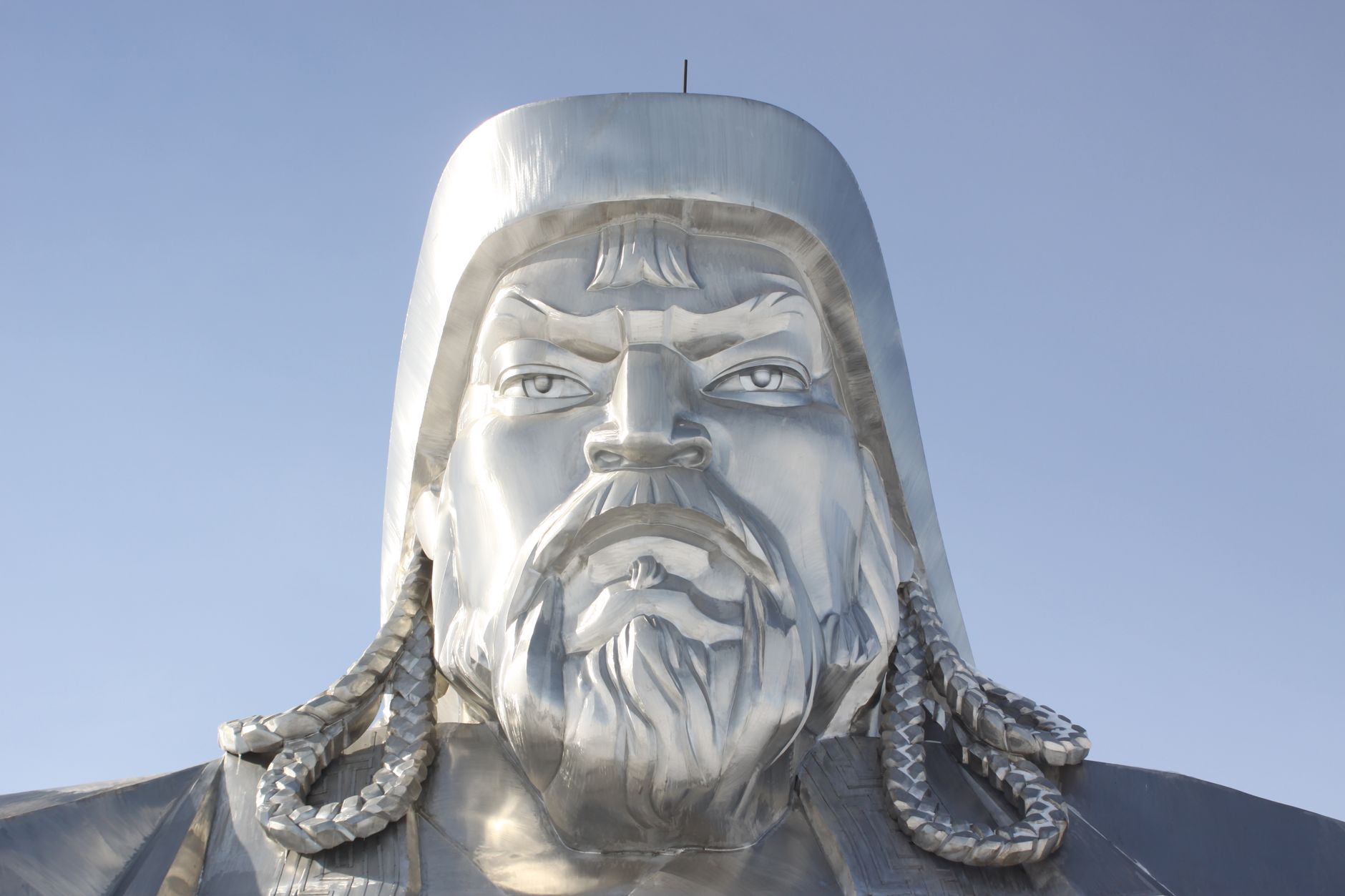
The Mongol Empire stands as the largest contiguous land empire in human history, spanning from Eastern Europe to the Sea of Japan at its peak. This article explores the remarkable rise, expansion, and legacy of an empire that reshaped world politics, trade, and cultural exchange. We'll examine Genghis Khan's innovative leadership, the empire's golden age, and surprising aspects often omitted from popular narratives.
Background and Origins
Before the Mongol Empire emerged, the steppes of Central Asia were fragmented among nomadic tribes frequently at war with each other. Born as Temüjin around 1162, the man who would become Genghis Khan experienced early hardships: his father was poisoned by rival Tatars when he was just nine years old, and his family was abandoned by their clan to fend for themselves in the harsh Mongolian wilderness. Despite these formidable challenges, Temüjin gradually built alliances through strategic marriages, betrayals, and military prowess.
By 1206, Temüjin had united most Mongol and Turkic tribes across the steppe and was granted the title "Genghis Khan" (meaning "Universal Ruler") at the Kurultai, a council of Mongol chiefs. This moment marked the birth of the Mongol Empire and established revolutionary governance structures. Genghis Khan implemented a meritocratic system based on loyalty and ability rather than nobility of birth—a radical departure from traditional steppe hierarchy. The famous Yasa law code created order through surprisingly modern rules regarding religious tolerance, hospitality, and the sanctity of ambassadors. As historian Jack Weatherford notes in "Genghis Khan and the Making of the Modern World," "The Mongols made no religious discrimination, and they exempted religious leaders of all faiths from taxes." This inclusive approach would become instrumental as the empire expanded across diverse territories with varied populations and beliefs.
Key Events and Expansion
The Mongol Empire expanded with astonishing speed, conquering territories through a combination of unmatched military tactics, psychological warfare, and strategic diplomacy. The military machine that Genghis Khan created was built on highly mobile cavalry units, revolutionary communication systems using flags and horns, and an unrivaled horse relay system called the Yam that could deliver messages across the empire in days rather than months. Between 1207-1219, the Mongols conquered Western Xia and Northern China, taking Beijing in 1215 after three years of siege.
Beginning in 1219, Genghis Khan led what many consider his most remarkable campaign against the Khwarazmian Empire in Persia and Central Asia. When the Shah executed Mongol envoys in a diplomatic insult, Genghis responded with total war that decimated the region but also opened unprecedented trade routes (the precursor to the Silk Road's golden age). Following Genghis Khan's death in 1227, the empire continued expanding under Ögedei Khan (his third son), who attacked Poland, Hungary, and Eastern Europe between 1236-1241, reaching as far as Vienna and the Adriatic Sea. These campaigns earned the Mongols their formidable reputation, with chronicler Matthew Paris writing in 1240: "They are inhuman and beastly, rather monsters than men, thirsting for and drinking blood, tearing and devouring the flesh of dogs and human beings."
Under the rule of Kublai Khan (grandson of Genghis), the empire reached its zenith with the complete conquest of China by 1279, where he established the Yuan Dynasty. The Pax Mongolica—Mongol Peace—emerged as a century of relative stability and trade across Eurasia, with Marco Polo famously making his journey to China during this period. At its peak, the Mongol Empire covered approximately 24 million square kilometers, 16% of Earth's land area, and ruled over 100 million people of diverse cultures, religions, and ethnicities.
Surprising Facts Most People Don't Know
Contrary to popular belief, the Mongols developed a sophisticated approach to governance that promoted stability, trade, and religious freedom. Rather than imposing Mongol customs on conquered peoples, they often adopted local administrative practices and incorporated diverse advisors into their governments. Under Mongol rule, the Silk Road flourished as never before, with increased security, standardized paper money, and advanced postal systems facilitating East-West exchanges of goods, ideas, and technologies like gunpowder, paper, and printing.
The Mongols established remarkably progressive policies for their time, particularly regarding religion. They exempted religious institutions from taxes and embraced freedom of worship (despite what pop culture portrays), with some khans even incorporating elements from multiple religions into their personal practices. Women in Mongol society enjoyed significantly more freedom than their counterparts in many contemporary civilizations; they could own property, participate in business, and, in rare cases like regent Töregene Khatun, rule the empire as regents.
Perhaps most surprisingly, the Mongols were early environmental managers, creating the world's first international hunting preserves and enforcing regulations against overfishing and excessive water pollution. They also pioneered innovations in public health by establishing quarantine systems to prevent the spread of diseases—practices that medieval Europe would not adopt for centuries. Their military campaigns, while brutal, resulted in the first large-scale mapping of Asia, information that would later aid European explorers and merchants.
Impact and Legacy
The Mongol Empire reshaped Eurasia's geography and connections between East and West in ways that still impact our world today. By creating the first truly globalized trade network, they facilitated the exchange of technologies, diseases, plants, ideas, and peoples across continents. This unprecedented connectivity contributed directly to Europe's Renaissance by introducing revolutionary knowledge in astronomy, mathematics, medicine, and printing techniques. Historian John Man argues, "Without the Mongols, it is almost certain that the Renaissance would have arrived later and differently."
The empire's fiscal innovations, including paper money and taxation reforms, influenced economic systems across Asia. Their religious tolerance policies created models for pluralistic societies that would be studied centuries later. The Pax Mongolica demonstrated the economic benefits of peaceful trade across vast distances—a concept that underpins modern globalization and economic integration theories.
Politically, the Mongols transformed the concept of governance along ethnic rather than religious lines, creating a precedent for secular states that emerged in later centuries. Their diplomatic networks established the first formal relations between China, Korea, Russia, Iran, and Europe, creating geopolitical frameworks that defined international relations in Asia for centuries. In Russia, the "Mongol Yoke" period (1240-1480) fundamentally altered the political structure, centralizing authority in Moscow and influencing Russian administrative practices up to modern times.
Why This Still Matters Today
The Mongol Empire's legacy influences contemporary geopolitics, economics, and cultural exchange more than we realize. Modern China's territorial boundaries largely reflect those established by the Yuan Dynasty. The resurgence of the Silk Road concept in China's Belt and Road Initiative explicitly draws upon the Mongol-era connections between East and West. Current approaches to international diplomacy, particularly regarding religious and cultural diversity in global governance, can trace philosophical roots to Mongol policies of tolerance and incorporation.
Even our approach to information technology echoes Mongol innovations. Their Yam postal system functioned similarly to the internet—connecting distant regions through standardized message delivery, creating information networks, and facilitating rapid communication across vast distances. Google's corporate headquarters is even called the "Googleplex," referencing the Mongol capital of Karakorum, acknowledging this historical parallel.
Quick Facts
- The Mongol Empire at its peak (1279) covered approximately 24 million square kilometers
- Genghis Khan united the Mongol tribes in 1206, establishing the empire
- The Yam postal system could deliver messages 200 miles per day
- Under Mongol rule, the Silk Road flourished from roughly 1250-1350 CE
- Kublai Khan established the Yuan Dynasty in China in 1271
- The Mongol Empire introduced paper currency to much of Eurasia
Conclusion
The history of the Mongol Empire reveals a civilization far more complex, innovative, and influential than popular depictions suggest. From their revolutionary military tactics to surprisingly progressive governance policies, the Mongols fundamentally reshaped world history in ways that continue to resonate today. Their empire demonstrated that cultural diversity, trade connections, and meritocratic governance could create unprecedented prosperity across vast territories. As we navigate our increasingly globalized world, what lessons might modern societies learn from the Mongol approach to managing diversity across continents? Share your thoughts in the comments below.