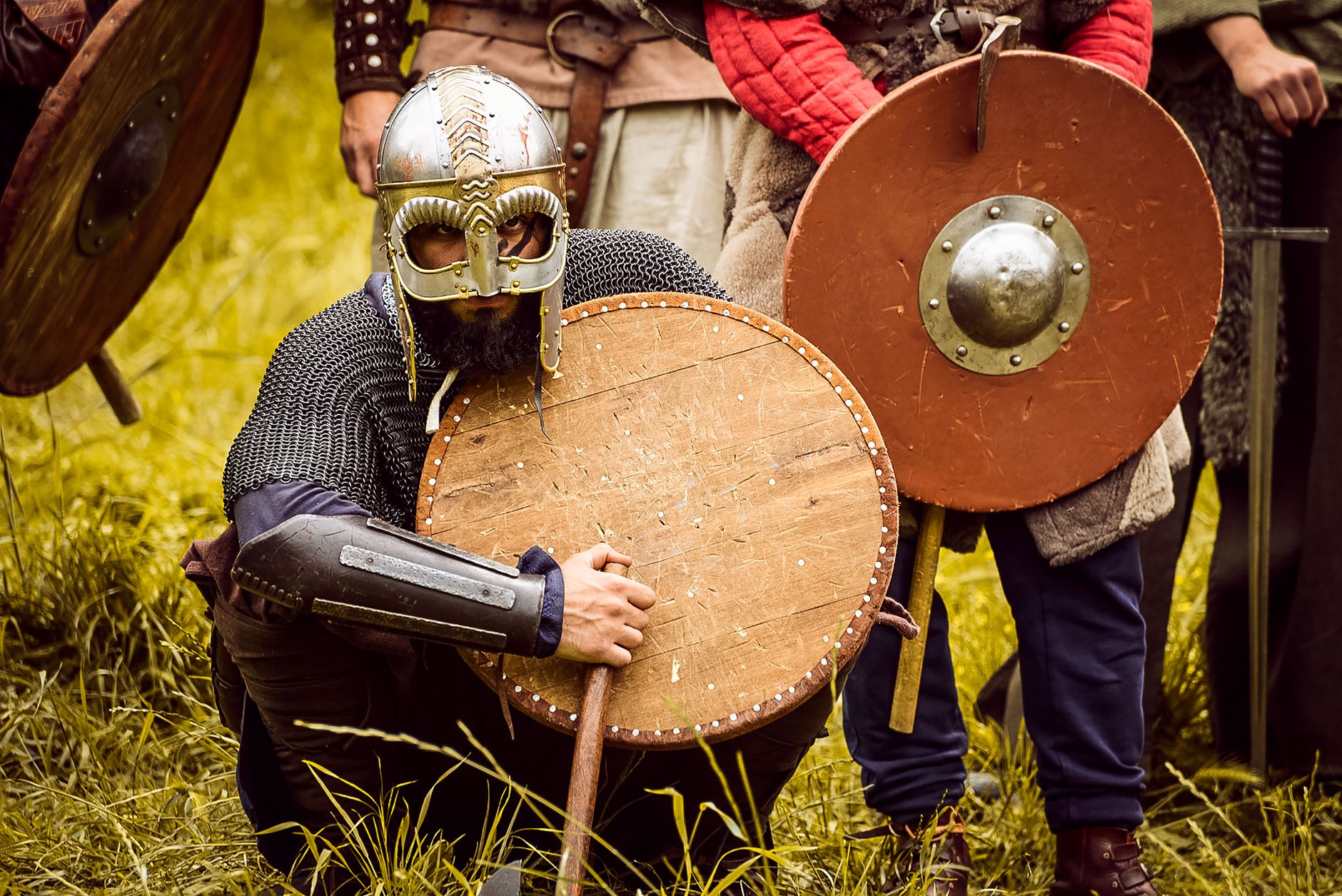
The Chaos Started Here
October 14, 1066, the day that changed England forever. But why did nobody stop them? Think about it this way: the Normans were essentially an elite force with better armor, horses, and tactics - and the English army was still stuck with their outdated 'fyrd' system of local defense militias.
This is like comparing the US Army's modern tactics to the ancient Celtic warriors' hit-and-run battles - a gross mismatch, to say the least. William the Conqueror, a Norman nobleman with a penchant for conquest, was not about to let 800 years of Saxon rule stand in his way.
The Setup: A Brief History of England Before the Conquest
So let's go back a bit. England in the 11th century was a hot mess of rival kingdoms and warlords, all fighting over scraps of land. The Saxon house of Wessex had managed to unite the various tribes, but their rule was on shaky ground. The Danes, still seething from their centuries-long invasion of England, began to stir again.
As you might expect, the Saxon king Edward the Confessor had some trouble choosing a successor - Edward's will left things up in the air. The two most significant claimants were Harold Godwinson, a powerful Anglo-Saxon jarl, and William, Duke of Normandy, claiming he'd been promised the throne by the king himself.
Harold eventually got crowned by the English church, but this is where things start to get messy. Edward's illegitimate son Edgar Atheling, who had also claimed the throne, fled to Normandy with the news - you can bet William wasn't about to let this golden opportunity pass.
And here's the thing most people miss: the Normans were already in England, quietly building allies, buying off high-ranking English nobles with land and titles. They were basically setting the stage for a coup from within.
Norman Conquest: 1000 Armored Knights Descend Upon Hastings
October 14th arrived, and the two armies faced off at Senlac Hill near Hastings. William had spent the summer rallying his nobles, buying his way to a sizeable army - it's said some 7,000 Normans turned up. The English, meanwhile, were largely composed of local villagers and a few hundred professional warriors.
This was it: 1000 armors clanking, 7,000 Norman knights charging into battle like a force of nature, versus a rather unimpressive English army that looked rather like a bunch of villagers in the way. You might assume the English would be all about guerrilla warfare and whatnot, like the old Celtic legends.
But nope - they formed a defensive line and prepared to die for their king.
As the battle began, the Normans were held back by the English shield wall for a good chunk of time - they even started to lose men. Here's the surprising fact: the Normans didn't actually win in any kind of decisive battle; it was a rather messy affair.
The Battle of Hastings Unfolds
The English line held for several hours, but in the end, it was the Norman cavalry that proved too much for the English. William's brother Odo, a particularly zealous cleric, even managed to get himself in on the action by swinging his sword around and generally getting the Normans all riled up.
William himself claimed to have prayed all night before the battle for a decisive victory - you can imagine the prayers. What I find remarkable is how modern this all sounds: a guy in high demand for battle, then off to pray for the night with his entourage, while the rest of the guys are fighting off Saxon hordes for his kingdom.
The actual fighting was brutal and chaotic. One account has the English lines being broken on the left flank by a group of Norman cavalry, who then proceeded to cut through the disorganized English.
The Aftermath of Hastings: 3 Shocking Stats You Won't Believe
Here's where it starts getting gruesome: 7,000 to 12,000 Norman knights arrived in England. Of those, it's estimated about 4,000 died at Hastings. And let's get this in perspective - this was a total bloodbath for the English too, with estimates ranging from 1-3,000 English casualties.
But wait, really? That's nothing compared to what happened after the battle. William's first act was to slaughter the prisoners he'd taken - basically everyone he hadn't given quarter to, which would roughly be the remainder of the entire English army. Think about it this way: it's like the aftermath of a war crime in a modern sense, but back then, it was simply business as usual.
Quick Facts:
- 1066 England's population: Around 1.5 million
- The Battle of Hastings lasted around 3 hours
- William the Conqueror later ordered the Bayeux Tapestry made as a visual record of that day.
- The English language and many of England's cultural institutions were severely impacted - especially the English nobility.
- It's said Harold Godwinson was killed in the battle by an arrow through his eye
Final Thoughts
The Battle of Hastings still resonates today in the way we talk about military invasions, colonialism, and cultural appropriation. Think about it this way: you're reading about a historical conflict right now that has eerie parallels to our 21st-century reality - how's that for a 'history repeats itself' vibe?
Sources & Further Reading
- Wikipedia: Battle of Hastings — this is where I got most of the historical facts, but feel free to go deeper into the article for more
- Wikipedia: William the Conqueror — for more info on the Norman king who conquered England
- History.com: Battle of Hastings — some pretty good stuff on this historical battle
- World History Encyclopedia: Norman Conquest — a solid history source for any of your questions
