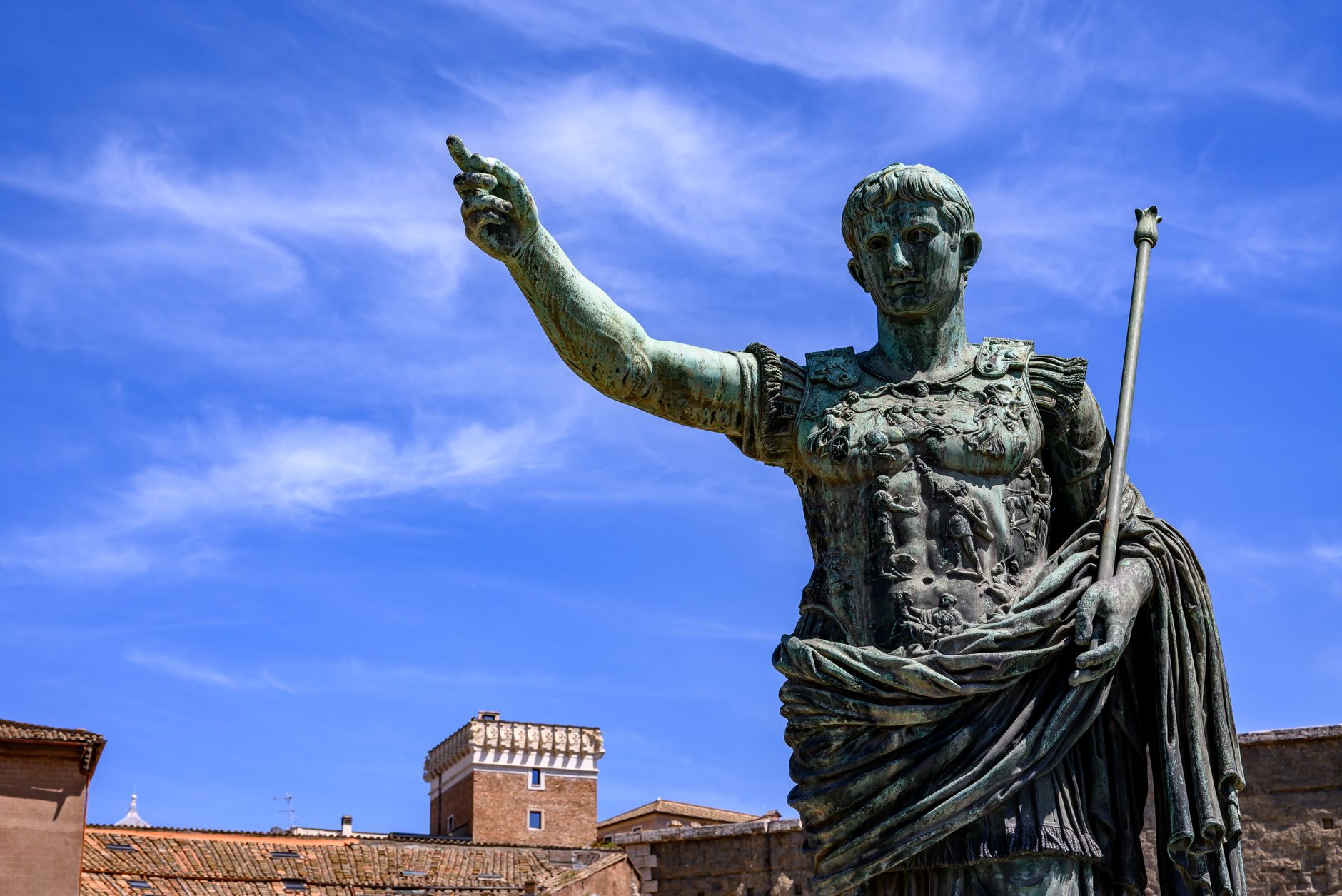
The Floor Was Slippery With Blood
It's the Ides of March, 44 BC, and the floor of the Senate isn't marble-polished pristine; it's slick with blood. Julius Caesar is down, gasping for air, staring up at a group of men who, just moments ago, were pretending to be his best friends. You probably think you know this scene because you had to read it in tenth-grade English, but let me tell you, Shakespeare cleaned it up significantly. The reality wasn't a poetic tragedy; it was a messy, panicked, pathetic execution in broad daylight. Caesar didn't deliver a stirring speech; he fought back, he tried to run, and eventually, he just bled out. But here's the thing that haunts me: he saw Brutus among the killers. He didn't say some fancy Latin phrase; he just pulled his toga over his head and gave up. That was the end of the Republic, but the story? The story was just getting started.
The Guy from the Wrong Side of the Tracks
Let's back it up. Before the daggers came out, there was just a kid born in the slums of the Subura in 100 BC. And I don't mean "slums" in a poetic, Dickensian way; I mean a dangerous, cramped, smelly maze of tenement buildings that burned down every other Tuesday. This is vital because we tend to think of Caesar as this silver-spoon god who descended from Olympus to rule Rome. Nope. He was a plebeian playing an aristocrat's game, and that chip on his shoulder drove everything he ever did.
His family was old—patrician—but broke and practically invisible. When the dictator Sulla decided to purge his political enemies, he put teenage Caesar on a hit list. Can you imagine that? Being 18 years old and having the most powerful man in the world want your head on a spike? Caesar had to go into hiding, shivering in marshes, bribing soldiers just to keep breathing. That experience fundamentally broke something in him and rebuilt it into steel. He realized early on that playing by the rules was a sucker's game. If the system wanted you dead, you changed the system.
But what about the pirates? This is the part that sounds like a superhero movie written by a frat boy. On his way to study rhetoric in Rhodes, Caesar was captured by Cilician pirates. They demanded a ransom of 20 talents of silver. Caesar laughed in their faces. He told them they undervalued him and demanded they ask for 50. Wait, really? He actually did that. He spent 38 days in captivity, reciting poetry to his kidnappers and jokingly threatening to crucify them. The pirates thought he was a hilarious, weird rich kid. They had no idea. The moment the ransom was paid, Caesar raised a fleet, hunted them down, and did exactly what he promised. He crucified them. But, because he was a "merciful" guy, he had their throats cut first. It’s a small detail, but tells you everything about the man: he always had the last laugh.
Crossing the Line That Changed Everything
Fast forward through the political maneuvering, the backroom deals, and the alliances with rich guys like Crassus and Pompey, and we get to the Gallic Wars. This is where Caesar becomes Caesar. He spent eight years up in modern-day France, fighting wars that were, frankly, illegal under Roman law. The Senate was too busy squabbling to pay attention, which was exactly what he was counting on.
And here’s the part I find remarkable: he wrote his own history while he was making it. He sent dispatches back to Rome—The Commentarii de Bello Gallico—written in the third person, making himself sound like this calm, brilliant strategist while his men were freezing to death in the mud. "Caesar did this," "Caesar saw that." It’s the original ghost-written autobiography, except he wrote it himself under a pseudonym of his own name. It was propaganda so effective that people in Rome were reading his battle reports like they were breaking news tweets.
Then came 49 BC. The Senate ordered him to disband his army and come home alone. It was a trap. Everyone knew it was a trap. Caesar stood on the banks of the Rubicon River, the northern border of Italy, with one legion behind him. He knew that crossing it with an army was automatic treason. It was the death penalty. He paused. It’s easy to forget he was human, but in that moment, he must have felt the weight of it. He looked at his men and reportedly said, "Alea iacta est"—the die is cast. There was no going back. He wasn't just invading Italy; he was gambling his life on the belief that his soldiers loved him more than the Senate feared him. He was right.
He chased Pompey, his former son-in-law and partner, all the way to Greece and eventually Egypt. When he finally won, he didn't just defeat a rival; he dismantled the old world order. He wept when he saw Pompey's severed head, by the way. It wasn't all cold calculation; there was genuine grief there, complicated as it was.
The Part Nobody Talks About
But why did nobody stop him earlier? Why did Rome let a general turn the Republic into a personal reality show? Here’s the uncomfortable truth: Rome was broken. The "Republic" was a myth maintained by a clique of old oligarchs who hated paying taxes but loved owning everything. The institutions were failing. The streets were violent. The average person was starving.
Caesar comes in, and he starts fixing things. He cancelled debts. He reformed the calendar (which was a total disaster before him—he literally added 90 days to a single year just to get the seasons back in sync). He passed land reform bills. We look back and call him a tyrant, but to the guy selling fish on the street corner in 45 BC, Caesar was the only person in government who actually did his job. When he was appointed Dictator for Life, people cheered. They didn't realize that "Dictator for Life" meant the death of the voting booth forever. They just saw a strongman cutting through bureaucratic red tape. It’s terrifyingly modern, isn't it? You trade a little liberty for a lot of security, and suddenly you can't undo the deal.
The Senators who killed him weren't heroes of democracy; they were preservationists of their own privilege. They killed him because he was humiliating them. He sat on a gold throne in the Senate. He put his face on the coinage. He casually dismissed their centuries-old traditions like they were annoying speed bumps. They stabbed Caesar because they wanted their old, dysfunctional club back. And in doing so, they guaranteed that nothing would ever be the same again.
Why It Still Echoes Today
You might assume ancient history is just dusty dates and dead guys, but look around. The chaos of the late Roman Republic feels uncomfortably familiar to anyone doomscrolling through the news today. Caesar was the first master of the narrative. He understood that perception is reality. He bypassed the traditional media (the Senate) to speak directly to the people (the mob), using simple messaging and symbols to bypass logic. He literally wrote books about how great he was, and people bought them. We talk about "fake news" and "alternative facts" now? Please. Caesar invented the playbook.
Think about it this way: Caesar was the ultimate populist. He posed as the man of the people while acting like a king. He attacked the "elites" (even though he was one) to gain popular support. He used military glory to override the courts. When he marched into Rome, he claimed he was "liberating" the city from a corrupt regime. It sounds exactly like something you’d see on Twitter today, doesn't it? The political strategies he used—demonizing opponents, rallying the base, claiming a mandate from "the people" despite the institutions—are still in use 2,000 years later. We haven't learned a thing.
What shocks me most is that he probably knew how it would end. He dismissed his personal bodyguard a few months before the assassination. He had warnings—his wife Calpurnia had a nightmare the night before; the soothsayers told him to beware the Ides. He walked into the Senate anyway. Some say it was arrogance, but I think it was exhaustion or perhaps a twisted desire to see if his gamble had finally run out of luck. A man who doesn't fear death is the most dangerous man in the world, but he's also the most fragile.
Quick Facts
- Born: July 12 or 13, 100 BC, into the Subura slums of Rome.
- The Pirate Incident: Captured in 75 BC, he increased his own ransom from 20 to 50 talents of silver.
- The Rubicon: Crossed the river with the 13th Legion on January 10, 49 BC, triggering civil war.
- "Veni, Vidi, Vici": He sent this message ("I came, I saw, I conquered") after the short Battle of Zela in 47 BC.
- The Calendar Reformation: In 46 BC, he instituted the Julian Calendar, creating a 445-day "year of confusion" to fix the drift.
- Death Stab Wounds: According to Suetonius, Caesar was stabbed 23 times, though only one of them (the second one to the chest) was actually fatal.
Final Thought
Julius Caesar's life wasn't a tragedy of hubris; it was a warning about what happens when institutions rot and the people get desperate for a savior. He didn't destroy the Republic because he was evil; he destroyed it because he could. Does that make him a villain, or just the inevitable conclusion of a system that stopped working?