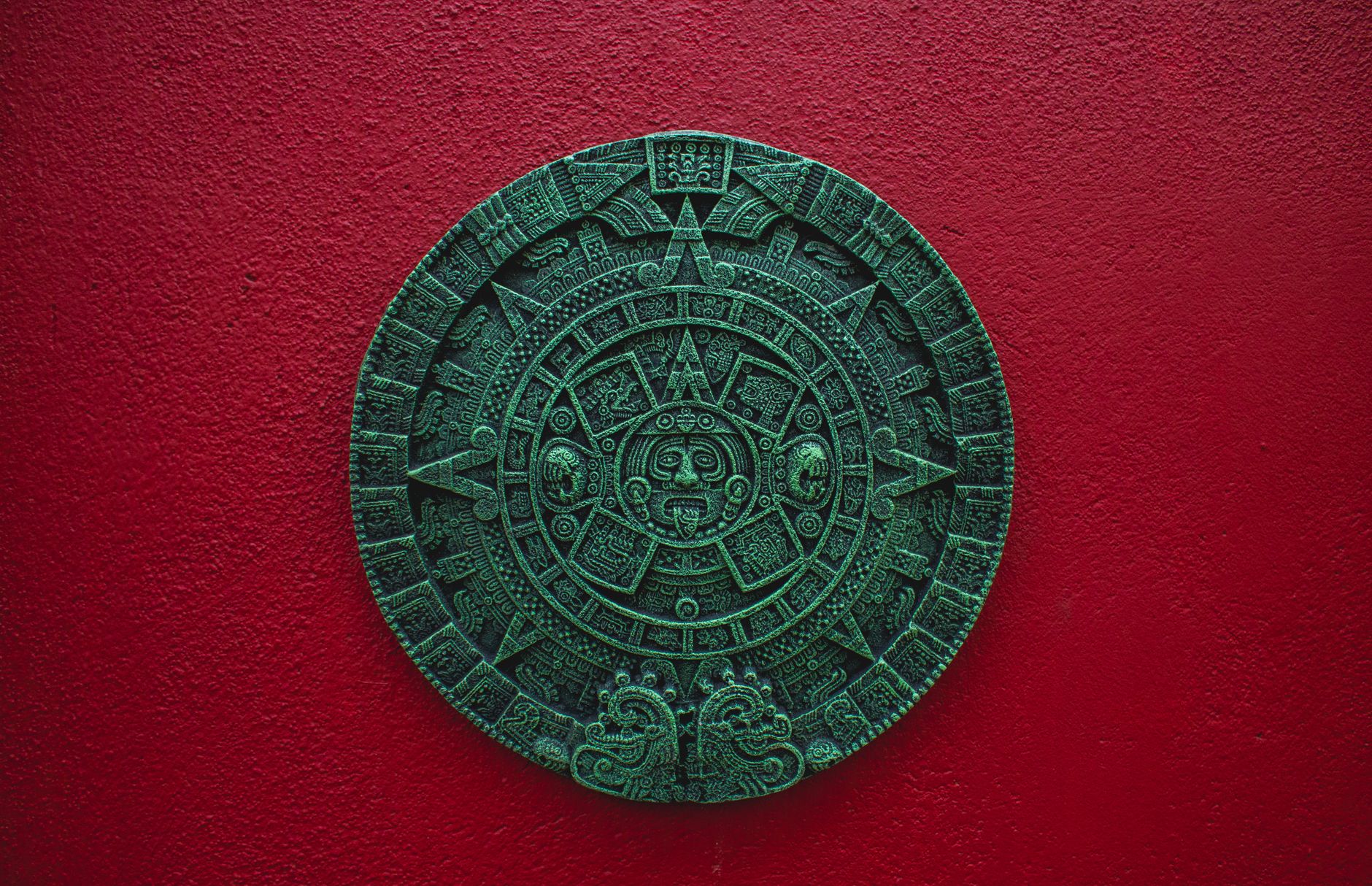
The Grandeur of Tenochtitlán
Imagine walking through the bustling streets of a city with over 200,000 inhabitants, surrounded by towering pyramids, grand temples, and sophisticated canals. This was the Aztec capital, Tenochtitlán, at the height of its power around 1519. You might assume this was a utopia, with its inhabitants living in harmony with nature and each other. Think again.
The Aztecs built their capital on top of an island in Lake Texcoco, a feat that's both impressive and unsettling. They had to constantly drain and fill the surrounding waters to create more land, which led to the infamous chinampa – a floating garden where they grew their prized crops.
This sounds exactly like something you'd see on Twitter today: #SustainabilityGoals. But was it really about being eco-friendly? Or was it more about having control over their environment? The Aztecs were masters of manipulation.
The Setup: A Brief History of the Aztecs
Fast forward to the 14th century, when the Aztecs were just a fledgling tribe. They hailed from what is now Mexico's central highlands and migrated to the Valley of Mexico around 1325. This was a time of constant war, as the Aztecs sought to expand their territory and absorb other tribes.
They were not the most impressive fighters, but their strategic alliances and sheer numbers allowed them to conquer the surrounding regions. By the mid-15th century, they had established themselves as a dominant force in the Valley of Mexico.
The Aztecs were expert politicians, using a complex system of tributes, trade, and diplomacy to keep their empire stable. They had a hierarchical social structure, with the emperor (huitzilopochtli) at the top and a council of advisors known as the teteuh. Ah, democracy at its finest – or rather, not.
One of the most fascinating aspects of Aztec politics was their concept of 'tlatoani.' This term refers to both the emperor's power and his ability to communicate with his people through art, literature, and oratory. In essence, the tlatoani was a masterful storyteller, using his words to shape public opinion and justify his decisions.
But why did nobody stop them? Or, at least, why did the Spanish conquerors let them get so far? The answer lies in the complex web of alliances and rivalries within the region.
The Aztecs had managed to secure alliances with various tribes, often through marriage and strategic gifts. These relationships were constantly shifting, as tribes changed allegiances like they changed their hairstyles. This is the kind of drama you'd see in a Game of Thrones episode – minus the dragons.
The Heart of the Story: War, Human Sacrifices, and the Spanish Conquests
War was an integral part of Aztec life, and their military campaigns were nothing short of brutal. They used advanced tactics like the 'tlachtli' – a game-like strategy where teams clashed in a chaotic melee. It's a bit like rugby, but with more blood.
The Aztecs believed in the practice of human sacrifices, where prisoners of war were ritually killed to appease their gods. Imagine being forced to watch your friends, family, or fellow soldiers being hacked to pieces in front of you. This is not exactly what you'd call 'morale-boosting.'
Here's the thing most people miss: the Aztecs were not just mindless savages. They believed in a cosmic balance between good and evil, with their gods constantly demanding a sacrifice to maintain order. You might call this 'spiritual existentialism' – or, at the very least, a justification for their dark practices.
By the early 16th century, the Aztecs had established themselves as one of the most powerful empires in the region. However, their expansionist policies eventually caught up with them. The Spanish conquistadors, led by Hernán Cortés, arrived in 1519 with an army of a few hundred soldiers and a bag of smallpox.
The Aztecs had no immunity to this new disease, which spread like wildfire through their densely populated cities. This is when the tide started to turn in favor of the Spanish.
I've always been struck by the way the Aztecs responded to the Spanish invasion. Instead of uniting against a common enemy, they continued to fight each other – and themselves. It's like they were too busy arguing over who gets to be the next tlatoani to notice the Spanish army taking over.
In the end, the Aztecs were caught unprepared and vastly outnumbered. On August 13, 1521, their capital, Tenochtitlán, fell to the Spanish. This marked the end of the Aztec Empire, as we knew it.
The Part Nobody Talks About: The Role of the Spanish and Smallpox
Fast forward to 1521, when the Spanish had taken control of the Aztec Empire. What I find remarkable is how quickly they incorporated the Aztecs into their own system of governance. This was not a benevolent empire; they were out to exploit the Aztecs' labor, resources, and cultural practices.
But that's not all – the Spanish brought with them a deadly disease, smallpox, that decimated the Aztec population. This is a classic case of unintended consequences: the Spanish thought they were doing the right thing, but their actions led to the destruction of an entire civilization.
Today, we know the devastating impact of smallpox on native populations in the Americas. It's a harsh reminder of the destructive power of diseases and the responsibility that comes with introducing them to new environments.
This was not a minor incident; it was a full-blown pandemic that ravaged the Aztec population. Some estimates put the death toll at over 90%. That's right – the Spanish got away with it. But what's even more disturbing is that this wasn't an isolated incident.
The Human Cost: Real People Behind the Empire
Let's take the story of Quinatzin, the Aztec king who lost his empire. This guy was the original 'king of the world,' with empires at his feet and wars won on his command. However, as the Aztecs began to decline, Quinatzin's fortunes took a turn for the worse.
Imagine being a leader who loses everything: your kingdom, your family, and your reputation. Quinatzin was forced into exile, where he continued to rule over a dwindling group of loyal followers. It's like living in a perpetual state of purgatory, unable to escape the consequences of your own actions.
What's even more poignant is the way the Aztecs responded to Quinatzin's downfall. Instead of blaming him for the empire's collapse, they began to worship him as a god. Talk about a way to save face.
Why It Still Echoes Today: A Tale of Power and Corruption
So, what can we learn from the Aztec Empire's rise and fall? At first glance, it's a cautionary tale about the dangers of imperial ambition. But scratch beneath the surface, and you'll find something more sinister.
The Aztecs had a system of checks and balances that was designed to prevent the tlatoani from abusing his power. However, as the empire grew, these institutions began to erode, allowing the tlatoani to become increasingly autocratic.
Think about it this way: what happens when one person has too much power? Does it lead to a utopia, or does it create an environment ripe for corruption and abuse? The Aztecs' history is a disturbing reminder that power, when unchecked, can lead to some very dark places.
Quick Facts
- The Aztec Empire was at its peak around 1519, with a population of over 200,000 inhabitants.
- The Aztecs built their capital, Tenochtitlán, on top of an island in Lake Texcoco, using advanced engineering techniques.
- The Spanish conquistadors, led by Hernán Cortés, arrived in 1519 with an army of a few hundred soldiers and a bag of smallpox.
- The Aztecs believed in human sacrifices, where prisoners of war were ritually killed to appease their gods.
- Quinatzin, the Aztec king, was forced into exile after the empire's decline.
- The Aztecs had a system of checks and balances, but it eventually eroded as the empire grew.
- Smallpox was introduced by the Spanish and decimated the Aztec population, killing over 90%.
- The Spanish incorporated the Aztecs into their own system of governance, exploiting their labor, resources, and cultural practices.
Final Thought
The Aztec Empire's rise and fall is a tale of ambition, corruption, and the devastating consequences of unchecked power. Was it a brilliant empire undone by its own excesses, or was it something more sinister? Perhaps it's a bit of both.
The Aztecs were masterful storytellers, using their words to shape public opinion and justify their decisions. However, their story is also one of darkness and tragedy, where human sacrifices, wars, and disease ravaged their population.
As we look at the Aztec Empire's legacy, we're left with a disturbing question: what happens when one person has too much power? Does it lead to a utopia, or does it create an environment ripe for corruption and abuse? The answer, unfortunately, is still unclear.
Sources & Further Reading
- Aztec Empire, Wikipedia Article
The Aztec Empire was a powerful and complex civilization that flourished in central Mexico from the 14th to the 16th century. - Tenochtitlán, Wikipedia Article
Tenochtitlán, also known as Mexico City, was the capital of the Aztec Empire from 1325 to 1521. - Quinatzin, Biography
Quinatzin was an Aztec king who lost his empire and was later forced into exile. - Smallpox in the Americas, Wikipedia Article
Smallpox was introduced by the Spanish and decimated the native populations in the Americas, leading to widespread disease and death. - The Spanish Conquest of Mexico, World History Encyclopedia
The Spanish conquest of Mexico was a complex and multifaceted process that involved the arrival of the Spanish, the rise of the Aztec Empire, and the eventual downfall of the Aztecs. - Aztec Culture, Britannica
Aztec culture was a rich and complex system that included art, architecture, writing, and mythology.
