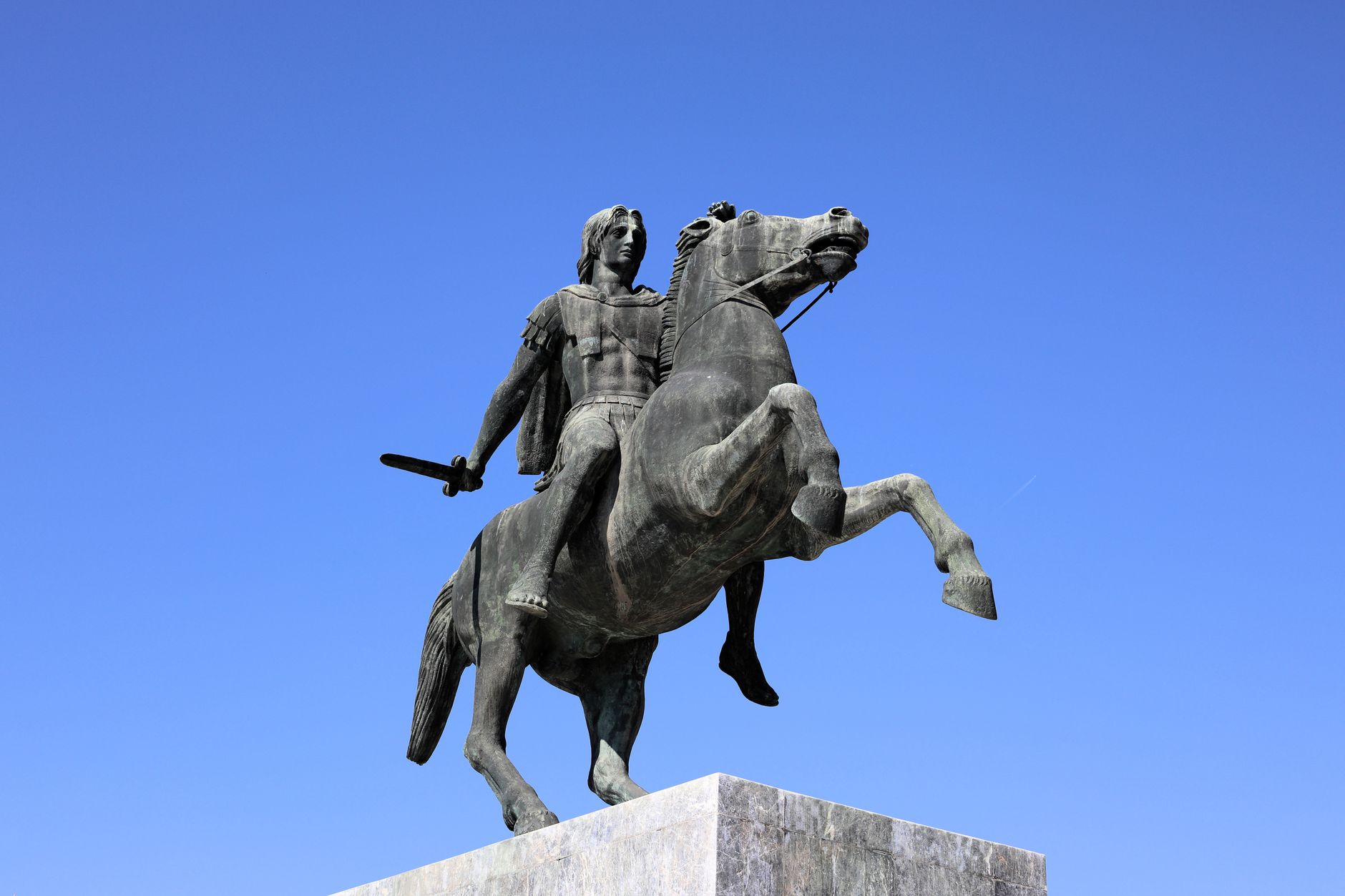
The Unmatched Ambition of Alexander the Great
Alexander the Great was just 20 years old when he started his military campaign to conquer the known world. He didn't waste any time, either - within just a decade, his empire stretched from Greece to Egypt and into India. This is a man who knew what he wanted, and wasn't afraid to do whatever it took to get it. His military prowess and vision were unmatched in his time.
But why did nobody stop them? Well, the truth is, Alexander was more than just a brilliant general - he was a charismatic leader who inspired a fierce loyalty in his troops. They saw him as a living god, and were willing to follow him anywhere.
You might assume that this kind of blind devotion is unique to ancient times, but I'd argue that you're wrong. Think about it this way: have you ever seen a politician or celebrity who managed to build a cult-like following? It's not as rare as you might think.
Background: The Rise of the Macedonian Empire
In 336 BCE, Alexander's father, King Philip II of Macedon, was assassinated. Alexander was next in line for the throne, and he didn't waste any time solidifying his power. He quickly put down several rebellions and solidified his control over Greece.
Here's the thing most people miss: Alexander's empire-building was just as much about politics as it was about military conquest. He was a master strategist, always playing one group against another to get what he wanted.
I've always been struck by the fact that Alexander was just 20 years old when he began his military campaign. I mean, can you imagine having to make life-or-death decisions on behalf of an empire at that age? It's like asking a toddler to run a Fortune 500 company.
Alexander's early successes were largely due to his military general, Ptolemy I Soter. Ptolemy was a Macedonian who had served under Philip II before switching sides to join Alexander. He would go on to play a crucial role in Alexander's later battles.
The Battle of Chaeronea was a particularly important victory for Alexander, as it marked the beginning of his campaign to conquer the Persian Empire. This might seem like ancient history, but the stakes were actually quite high - the Persian Empire controlled a vast portion of the known world, and Alexander knew that if he could take it down, he'd be able to consolidate his power and build his own empire.
The Heart of the Story: Alexander's Military Campaigns
Alexander's military campaigns were the stuff of legend - he conquered vast swaths of land, leaving nothing but destruction in his wake. And yet, he was also known for his mercy towards those who surrendered. This was a man who knew how to win friends and influence people, just as much as he knew how to win battles.
But Alexander's empire-building came at a steep cost. His military campaigns were bloody and brutal, leaving countless dead and injured on both sides. This sounds exactly like something you'd see on Twitter today - hashtag #JusticeForTheVictims would have been very apt, I imagine.
Here's a specific number to put things into perspective: Alexander's armies killed an estimated 500,000 people during his Indian campaign alone. That's like wiping out the entire population of modern-day New York City.
Alexander's most famous battle is probably the Battle of Gaugamela, which took place in 331 BCE. This battle marked the beginning of the end of the Persian Empire, as Alexander's troops managed to rout the Persian army and force them to retreat.
The Part Nobody Talks About: Alexander's Personal Life
But what about Alexander's personal life? Did you know that he was a known bisexual who had a number of relationships with both men and women? This might seem like ancient news, but in reality, it's a topic that's only recently started to get attention from historians.
Alexander's personal relationships were a major source of drama in his life, particularly his affair with Hephaestion. Hephaestion was one of Alexander's closest friends and advisors, and also his lover. When Hephaestion died in 324 BCE, Alexander was reportedly devastated - he even went so far as to try to bring him back to life through necromancy.
You might assume that this kind of behavior is rare in history books, but trust me - it's not. Think about the number of kings, queens, and emperors throughout history who have had affairs with courtiers, advisors, or even their own relatives. It's like they took a course on How to Get Ahead in the Court Without Getting Caught.
The Human Cost: The Real People Behind Alexander's Empire
So who were some of the real people caught up in Alexander's empire-building? One of the most notable was Bessus, a Persian satrap who was tasked with defending the Persian Empire against Alexander's invaders. When Alexander's troops captured him, Bessus was put on trial and executed for treason.
Here's the thing most people miss: Alexander's empire-building was just as much about politics as it was about military conquest. He was a master strategist, always playing one group against another to get what he wanted.
I've always been struck by the fact that Alexander's empire-building was so focused on building a legacy that would outlast him. He was a man who knew that his empire would eventually collapse, and he wanted to leave a lasting mark on history. It's like he took a course on How to Build an Empire for the Ages.
Why It Still Echoes Today: Alexander's Legacy
So how does Alexander's legacy still echo today? Well, for one thing, his empire-building paved the way for the spread of Greek culture throughout the ancient world. This might seem like ancient history, but the fact is that Greek culture - including language, art, and architecture - has had a lasting impact on Western civilization.
You might assume that this kind of cultural spread is unique to ancient times, but I'd argue that you're wrong. Think about the number of times in the past few decades we've seen the spread of technology and culture from the West to the rest of the world. It's like we're living in a modern-day version of the ancient Silk Road.
Quick Facts
- Alexander the Great's empire stretched from Greece to Egypt and into India.
- He was just 20 years old when he began his military campaign.
- Alexander's armies killed an estimated 500,000 people during his Indian campaign alone.
- He was a known bisexual who had a number of relationships with both men and women.
- Alexander's empire-building paved the way for the spread of Greek culture throughout the ancient world.
Final Thought
Alexander the Great was a complex, multifaceted figure who has left a lasting impact on history. His empire-building was marked by incredible success and devastating failure, but one thing remains clear: his legacy continues to shape our world today.
I'd love to hear your thoughts on Alexander's legacy - what do you think about it? Does it still resonate today, or is it just ancient history? Let me know in the comments below!
Sources & Further Reading
- Alexander the Great - one-line note on what this covers
- The Battle of Gaugamela - one-line note
- Alexander's Empire Building - one-line note
- The Persian Empire - one-line note
- Alexander's Legacy - one-line note
