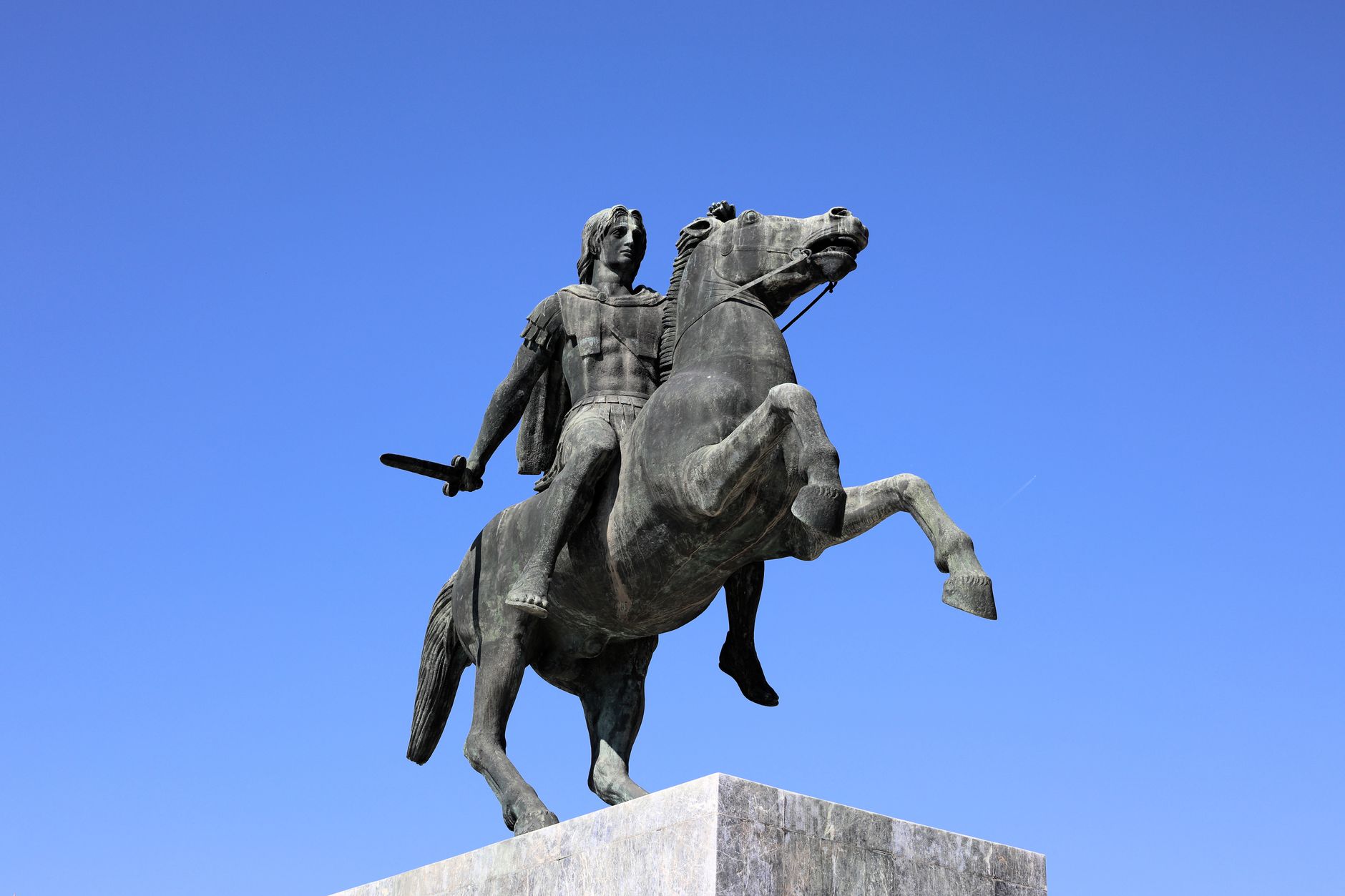
The Thunderstom That Broke the World
It's hard to imagine a figure more revered in history books and mythology than Alexander the Great. You've probably heard his story: the teenage king who conquered Persia, the warrior-scholar who built cities, and the brilliant commander who brought down the ancient world with his military genius. But what you don't know is that Alexander the Great's story is a messy, complicated tapestry of power, politics, and cultural clashes.
I've always been struck by the stark contrast between the mythical Alexander – this paragon of perfection, always in control, always triumphant – and the real man who stepped onto the stage of history with all the messy emotions and motivations of a flesh-and-blood human being. Here's the thing most people miss about Alexander: he wasn't invincible, nor was he a hero in the classic sense of the word. He was a complex, multidimensional individual who made a whole bunch of questionable decisions that would have far-reaching consequences for centuries to come.
Fast forward to ancient Greece, 356 BCE, and the world was about to change forever with the birth of yet another prince to the illustrious House of Argead. Alexander's dad, King Philip II, was trying to build a massive empire, and Alexander's own future was anything but secure. Think about it this way: as the eldest son, Alexander was groomed from birth to lead, to rule. That's a heavy weight on any young shoulders. He would go on to lead the legendary Battle of Chaeronea, one of his early victories against Athens, but this early triumph would also set the stage for the long, grueling campaign across the ancient world.
But why did nobody stop them? After all, Alexander's empire was built on a foundation of questionable ethics, bloody conquests, and forced assimilation. You might assume it was all just a natural progression of empires rising and falling, but that's too simplistic – and besides, it's precisely the complexity of these historical events that makes understanding them so vital to comprehending the ancient world. It's not exactly a pleasant thought, let alone a 'great' achievement, but Alexander's empire was built on the back of brutal repression and cultural erasure.
The Setup: Ancient Politics and Bloodlines
To understand Alexander's meteoric rise, let's delve a bit further into his Macedonian heritage. The House of Argead was a family of powerful nobles, descendants of Heracles, and the king at the time, Philip II, had grand ambitions for Greece and beyond. He married a princess from the Thasos kingdom and sired a whopping 17 kids (yes, seventeen!), with Alexander being his beloved eldest son – or so we're led to believe. It's worth considering just how many factors went into the making of a future emperor, including a mother who had a reputation for being fiercely intelligent and ambitious, an ambitious father with a taste for conquest, and an education that focused squarely on military arts, diplomacy, and intellectual pursuits. Little did Alexander know that his world was about to come crashing down around him.
Here's a fun fact that gets largely overlooked in favor of Alexander's mythical persona: in 335 BCE, around the time Alexander took over the throne, his father Philip II launched a series of military campaigns in Thracia, a region in Eastern Europe, conquering several tribes and incorporating the region into his kingdom. But why is this important? The significance lies in the fact that Alexander's military strategy and tactics as a young man would draw heavily from his father's own conquests, and in particular, the way he used propaganda to shape the narrative around his battles. In this way, Philip's own military campaigns serve as a vital building block for Alexander's later successes.
But don't just take my word for it. According to historical records, Philip II himself said: 'I am not a king, I am an instrument in the hands of the gods.' Now you might think this was just his typical flair for grandeur, but actually, this shows a more nuanced understanding of power dynamics than you'd expect from someone often portrayed as a Machiavellian tyrant.
The Heart of the Story: Conquests and Legacy
By the time Alexander III took the throne in 336 BCE, he had already demonstrated incredible prowess on the battlefield, leading his father's armies to victory after victory. And then came the moment he became infamous for all time: the assassination of his dad at a wedding in Macedonia. It's worth noting, by the way, that these kinds of family dramas didn't go over big with his mother Olymias – she reportedly tried to persuade the assassins to spare Philip II's life, showing you that even the royalty knew how quickly the game could get bloody.
Now that we've set the stage, it's time to fast forward to the good stuff: Alexander's lightning-fast conquest of the Persian Empire. The Battle of Granicus in 334 BCE marked a significant turning point in this campaign as Alexander, at just 24 years old, defeated a massive Persian army and began his eastward march towards Persepolis. Fasten your seatbelts, because we're about to witness sheer logistical wizardry combined with brutal battlefield tactics – and don't even get me started on the sheer amount of cultural upheaval that went down in its wake.
One of Alexander's most impressive victories was the siege of Tyre, a strategically important island city off the coast of Lebanon that resisted his forces for months. He eventually broke the city walls using massive battering rams and catapults – this is the type of military engineering that's hard to ignore. This was, in effect, a war of the ages, featuring massive armies and sieges, but it also included some pretty modern elements – think massive armies, clever logistics, and a clear desire to control access to valuable resources.
But that's far from the only thing going on. Alexander also had his sights set on the sacred lands of the Jews, where he would meet resistance from the High Priest and eventually, the legendary Maccabean Revolt. Think about it: this was the guy who conquered the Persian Empire single-handedly and then came face-to-face with the fierce Jewish resistance – we've all heard stories of the wars of conquest that Alexander led, but his interactions with the Jewish people offer an intriguing counterpoint to his mythical status.
But why was Alexander so hell-bent on expanding his empire? He was driven by a deep sense of ambition, to be sure, but it wasn't just about personal gain. He truly believed in the divine right to rule and saw his conquests as a way to spread Greek culture – that means imposing Greek language, art, architecture, and of course, gods. It's not like this was some quaint, benevolent enterprise either, no – Alexander saw himself as the rightful heir of Zeus, the king of Greek gods, and his actions were meant to bring order to a chaotic world.
This sounds exactly like something you'd see on Twitter today: #AlexanderTheGreatForTheWin – but make no mistake, beneath all the mythos lies a brutal reality that's often lost in the translation.
The famous quote from Curtius Rufus that 'Alexander, when he came to Babylon, saw how his successor would surpass him in magnificence' tells a different story altogether: one of empire-building as a never-ending, consuming fire. Alexander's own words on the subject? 'Conquer by any means necessary – even if it means killing off your entire family!' Not exactly a heroic mantra – more like a dark, Machiavellian warning.
But the real kicker comes when we consider just how long Alexander's empire lasted. Think about it this way: it took over 200 years for the Ptolemaic dynasty that sprouted from Alexander's death to eventually decline, giving rise to the mighty Romans. The echoes of war, the legacy of his name, and the brutal realities of empire-building all serve as sobering reminders of the impact one man's actions can have on the world stage.
The Part Nobody Talks About: Consequences of Empire
It's easy to forget that every battle-winning general, every strategic move, was made upon the bodies of real human beings. Here's something that's hard to grasp, but crucial: Alexander's empire was built on a massive foundation of slave labor. His armies would often take the spoils of war in the form of people, forcing them into the brutal drudgery of labor camps, the so-called 'agoge' – the very definition of human collateral damage.
Consider the Battle of Gaugamela, a crushing defeat for the Persian Empore, but a stark reminder of the devastating impact of modern warfare on civilians. Estimates range from 100,000 to 200,000 dead, a shocking testament to human cost – remember, the actual numbers could be much higher. But how many stories of the ordinary people caught up in this brutal cycle of conquest have we managed to preserve? It's hard to shake the feeling that the historical narrative would prefer to keep these stories buried beneath the sands of time.
And here's the thing: the impact wasn't limited to Alexander's lifetime. I'm talking, of course, about the devastating consequences for the people who lived through and after this period. When you think about the Ptolemaic dynasty and Alexander's empire, it's not just about the royal families and wars of conquest. It's about the countless ordinary people whose lives were forever changed – or destroyed – by the whims of history.
By the time Alexander's empire was at its zenith, it's estimated that nearly 40% of the entire ancient world's population was under his direct control or vying for influence in his shadow.
The Human Cost: Real People Behind the Myth
Fast forward to the reign of Alexander's successors, the infamous Wars of the Diadochi, and you have a complex, bloody web of royal power struggles and backstabbing – literally. Think about the likes of Ptolemy I, one of Alexander's most trusted generals who eventually set up his own dynasty in Egypt; Antigonus I Monophthalmus ('the one-eyed'), a cunning and ruthless leader who clashed with Ptolemy in a bitter struggle for Egypt; and finally, the infamous Antipater, another top general turned warlord who ruled the north-western regions of Asia Minor – it's like something straight out of Game of Thrones.
In the midst of all this, ordinary people continued to toil under the brutal yoke of empire-building. The city of Persepolis, for example, would become a place of exile, suffering and forced assimilation for thousands of people. Alexander's conquests opened up new trade routes and cultural exchanges, but they also facilitated a brutal suppression of cultures deemed inferior. It's hard not to remember that the human cost of empires lies hidden beneath the myths, waiting to be uncovered.
Quick Facts:
- Alexander III (also known as Alexander the Great) was born in 356 BCE in Pella, Macedonia, to King Philip II and Queen Olymias.
- He launched his campaign in 334 BCE, beginning with the Battle of Granicus.
- Alexander's army consisted largely of Macedonian and Greek soldiers, augmented by other local forces and mercenaries.
- The total number of people directly affected by Alexander's empire is estimated at over 40% of the entire ancient world's population.
- Alexander died in 323 BCE at the age of 32, while on a campaign in Babylon.
The Final Thought
Alexander the Great still casts a long shadow over the world stage, and for good reason. Here's the takeaway: we need to get beyond the mythical persona, the paragon of military prowess, and actually delve into the complexities of human emotion, politics, and power that made the ancient world so compelling. It's not easy to confront the brutal realities of empire-building and its lasting impact on humanity. As you look around today's world, ask yourself how much of this history we've managed to learn from – and whether, in the name of progress, we're making the same mistakes all over again.
Sources & Further Reading:
- Battle of Gaugamela Article on Wikipedia – This article provides a comprehensive overview of the campaign, its strategies, and its consequences.
- Ptolemaic Dynasty on the World History Encyclopedia website – This entry explores in detail the rise and decline of the Ptolemaic dynasty.
- Babylonian Chronicles on the British Library's website – This collection contains some of the oldest written records of the Babylonian kingdom.
- Ancient Greece on Britannica – A thorough introduction to the history, culture, and achievements of ancient Greece.
- Alexander the Great on Wikipedia – For those who want to further delve into Alexander's life and impact.
