Introduction
While most of the world knows the name Dracula from Bram Stoker’s gothic horror novel, the historical figure who inspired the vampire count was far more terrifying than any fictional monster. Vlad the Impaler, the 15th-century Voivode of Wallachia, was a man whose name struck fear into the hearts of the Ottoman Empire and his own people alike. This article dives into the brutal history of Vlad III, separating the man from the myth to uncover the true story of the real Count Dracula.
The Origins of Vlad the Impaler
Born in 1431 in Sighisoara, Transylvania, Vlad III was born into a world of political chaos and constant warfare. He was the son of Vlad II Dracul, a nobleman who was admitted into the Order of the Dragon, a chivalric order dedicated to fighting the Ottoman expansion into Europe. The name "Dracul" means "Dragon" or "Devil" in Romanian, and young Vlad inherited the surname "Dracula," meaning "Son of the Dragon" or "Son of the Devil."
His early life was marked by betrayal and violence. In 1442, his father handed him and his younger brother Radu over to the Ottoman Sultan Murad II as hostages to ensure his loyalty. While Vlad’s father was assassinated in 1447 by political rivals, Vlad endured years of imprisonment and brutal treatment in the Ottoman court. This period forged his unyielding hatred for the Ottomans and shaped his ruthless approach to rule. After escaping capture in 1448, Vlad briefly seized the Wallachian throne, but he was forced to flee to Moldavia. He finally reclaimed his birthright and the throne of Wallachia in 1456, beginning his reign of terror.
A Reign of Terror and Impalement
Vlad the Impaler is best known for his preferred method of execution, which earned him his grim nickname. He was obsessed with order and honesty, and he punished crime—especially theft and dishonesty—with extreme prejudice. Historical accounts suggest he impaled tens of thousands of people, including Ottoman prisoners, political rivals, and German Saxon merchants who opposed his rule. The stakes were often oiled and carefully inserted to avoid hitting vital organs, ensuring a slow, agonizing death that could last for days.
The most infamous event of his reign occurred in 1462 during the Night Attack of Targoviste. After rejecting Ottoman suzerainty and refusing to pay the jizya tax, Sultan Mehmed II marched a massive army of 90,000 men into Wallachia. Vlad, commanding a much smaller force, utilized guerrilla warfare. During the night, he launched a suicidal raid on the Ottoman camp in an attempt to assassinate the Sultan. Though he failed to kill Mehmed, the attack caused chaos. When the Ottomans marched toward Targoviste, they found the "Forest of the Impales"—20,000 Ottoman prisoners and Turkish corpses impaled on stakes outside the city walls. The sheer scale of this atrocity terrified the Sultan, who is historically quoted as saying, "How can we conquer a man who does such things?" Mehmed retreated, leaving Vlad as one of the few rulers to successfully repel the Ottoman Empire during that era.
Surprising Facts Most People Don't Know
Despite his reputation as a bloodthirsty monster, Vlad’s history is full of contradictions and nuances often lost in vampire fiction. For instance, Vlad was not a vampire, and there is no historical evidence he ever drank blood. However, German pamphlets printed in the late 15th century, which spread his reputation throughout Europe, did claim he dipped his bread in the blood of his victims. These pamphlets were arguably the first "mass media" propaganda campaign, designed by his political enemies to blacken his name.
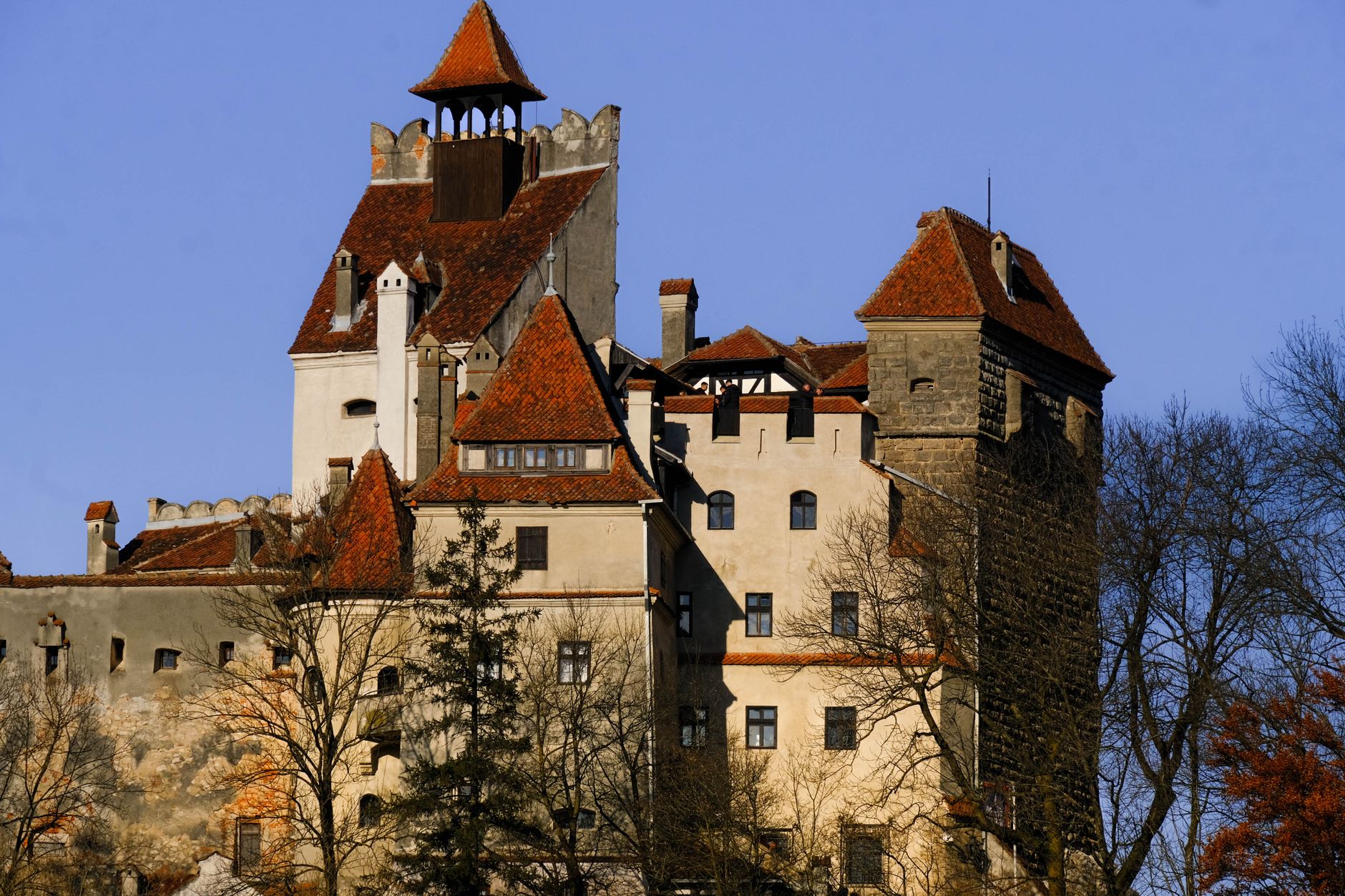
Another surprising fact is that Vlad was actually a hero to the Romanian people for his defense of Christendom. While his methods were brutal, he established a strict order that eliminated crime and corruption within his borders. A popular story tells of a golden cup placed in a public square for travelers to drink from; the cup was never stolen because anyone caught stealing would be immediately impaled. Additionally, while Bram Stoker’s Count Dracula lives in a crumbling castle in Transylvania, the real Vlad the Impaler never actually ruled Transylvania. He was the ruler of Wallachia (modern-day southern Romania), though he was born in Transylvania. The castle most associated with him in fiction, Bran Castle, was never his primary residence; his main fortress was the ruins of Poenari Castle, high in the mountains.
Impact and Legacy
Vlad’s legacy is a complex tapestry of national heroism and sadistic tyranny. In Wallachia, he is remembered as a just, though severe, ruler who restored order and protected his realm from foreign invaders. His extreme measures were aimed at stabilizing a fractured society and defending it against a powerful empire. For the Western world, however, his memory faded into folklore for nearly four centuries until Irish author Bram Stoker discovered the name "Dracula" in a British museum while researching vampire myths. Stoker attached the name to his fictional Count, forever linking the historical figure with the undead.
The transition from warlord to pop-culture icon was solidified in the 20th century. During the communist era in Romania, Vlad was celebrated as a nationalist symbol of resistance. In the West, films like Francis Ford Coppola’s Bram Stoker’s Dracula cemented the visual link between the vampire and the historical ruler, often blurring the lines between the two. Today, this dichotomy fuels a massive tourism industry in Romania, where visitors flock to see his supposed haunts, drawn by the morbid curiosity of the "real Count Dracula."
Why This Still Matters Today
Understanding Vlad the Impaler provides crucial insight into the geopolitical and cultural history of Southeastern Europe. His life illustrates the extreme brutality of medieval power politics and the desperate measures smaller states took to survive between great empires. Furthermore, his story serves as a prime example of how historical figures can be distorted over time, transforming into something entirely different through literature and film. The persistence of the Dracula myth shows our enduring fascination with the thin line between history and horror.
Quick Facts
- Vlad III Dracula was born in Sighisoara, Transylvania, in 1431.
- His father, Vlad II Dracul, was a member of the Order of the Dragon.
- He ruled Wallachia three separate times: 1448, 1456–1462, and 1476.
- Estimates of his total victims range from 40,000 to 100,000 people.
- His primary fortress, Poenari Castle, had 1,450 steps leading up to it.
- Vlad the Impaler died in battle against the Ottomans near Bucharest in late 1476 or early 1477.
Conclusion
Vlad the Impaler was a product of his violent times, a ruler whose cruelty matched his determination to protect his homeland. While he was undoubtedly a sadistic tyrant who committed unspeakable atrocities, he was also a brilliant tactician who stood up to one of history's most powerful empires. The enduring popularity of the vampire myth proves that the world is captivated by his darkness. Do you believe history remembers him unfairly, or does his reputation as a monster fit his crimes?