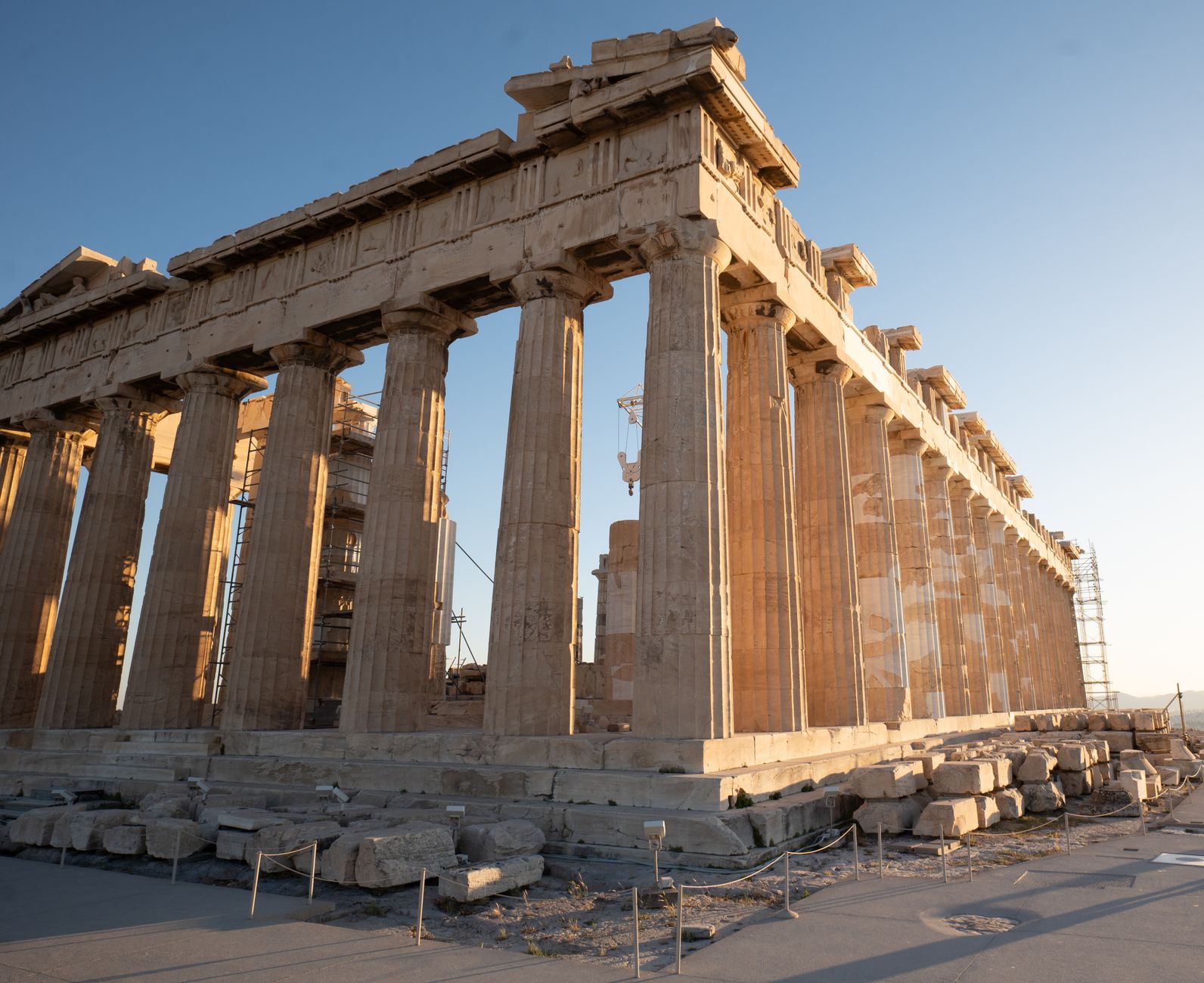
A City Divided: The Birth of Democracy in Ancient Athens
On the eve of a bitter civil war, the statesman Solon (596-559 BCE) took a deep breath and restructured the Athenian system to divide citizens based on wealth rather than birth, opening the door for the lower classes to have a voice, albeit limited (1). Though his reforms wouldn't last, they laid the groundwork for a radical experiment that would define the ancient world.
The Origins: From Tyranny to the People
Before Athens became the world's first democracy, it was plagued by the same issues that defined much of the ancient world: aristocratic infighting and the specter of tyranny. In the sixth century BCE, power was tightly held by the Eupatridae, the region's well-born noble families.
The turning point came with a series of reforms driven by crisis. In 594 BCE, Solon was appointed to reform a city on the brink of civil war due to debt slavery (2). He (wasn't) able to fully implement his vision, but his reforms paved the way for the eventual introduction of democracy. The true architect of democracy, however, was Cleisthenes. In 508/507 BCE, facing a political standoff with Isagoras, Cleisthenes took a gamble and appealed to the people. He reorganized the political map of Attica into demes (local districts), effectively breaking the power of the aristocratic clans. (By dividing the population into smaller, more manageable units, he essentially created a sense of community, where neighbors could influence one another.) He established the Ecclesia, the sovereign assembly of all male citizens, creating a system known as demokratia—rule by the people. This was a radical moment in history where governance shifted from the few to the many.
The Golden Age and The Corruption of Power
The 5th century BCE ushered in the Golden Age of Athens, fueled by the wealth of the Delian League and the leadership of Pericles (roughly 461 to 429 BCE). Under Pericles, Athenian democracy reached its most radical form. Pericles introduced pay for public office and jury service, allowing even the poorest citizens to participate fully in government.
However, this era also laid the groundwork for democracy's destruction. The system that empowered citizens also enabled mob rule. The Ecclesia became susceptible to demagogues—charismatic leaders who flattered the emotions of the common people rather than adhering to rational policy.
The turning point for Athenian democracy was the Peloponnesian War (431–404 BCE) against Sparta. As the war dragged on, desperation set in. The Athenians made disastrous decisions, such as voting to execute all male citizens of Mytilene after a revolt, only to reverse the decision the very next day. The ultimate blow came with the Sicilian Expedition (415–413 BCE), where, swayed by the rhetoric of Alcibiades, the Assembly voted to invade Sicily. The result was a total annihilation of the Athenian fleet and army, a catastrophe from which Athenian democracy never fully recovered.
Surprising Facts Most People Don't Know
When we picture democracy, we often imagine a system built on universal principles of fairness. The reality in Ancient Greece was far harsher and more volatile than most people realize.
First, Athenian democracy was exclusive. The "people" (demos) constituted only about 10-20% of the population. Women, enslaved people, and resident foreigners (metics) were strictly excluded. Furthermore, the Athenians invented "ostracism," a procedure where citizens could vote to exile any individual for ten years simply for being too powerful or unpopular, without needing a specific criminal charge.
Perhaps most shocking is how quickly Athenian democracy flipped back and forth. During the chaos of 411 BCE, the democracy was actually overthrown by an oligarchic coup known as the "Four Hundred" to seek peace with Sparta. Though democracy was quickly restored, it demonstrated the fragile nature of the state. In 406 BCE, the Assembly famously tried and executed six of its own generals en masse for failing to rescue shipwrecked sailors—an illegal act driven by mass hysteria.
Impact and Legacy: Why It Matters
The fall of Athenian democracy was not just a military defeat; it was an ideological collapse for the ancient world. In 404 BCE, Athens surrendered to Sparta. The Spartans installed the brutal "Thirty Tyrants," an oligarchic puppet regime led by Critias that executed wealthy citizens and seized property. While democracy was eventually restored in 403 BCE, Athens was a shadow of its former self, subservient firstly to Sparta and later to the Kingdom of Macedon.
Despite its collapse, the legacy of this experiment endured. The Romans adopted certain Athenian elements but largely mixed them with aristocratic sentiments to create the Republic, fearing the "mob rule" that had doomed Athens. For centuries, democracy was viewed with skepticism by European philosophers, often seen as a flawed system that led to instability.
The true impact was not a continuous line of democratic governments, but the survival of the idea. The writings of Aristotle, Herodotus, and Thucydides preserved the mechanics and the warnings of Athenian democracy, seeding the thoughts that would ignite the American and French revolutions two thousand years later.
Why This Still Matters Today
The history of how Ancient Greece invented and destroyed democracy serves as a stark warning for modern societies. The Athenians proved that the masses could govern themselves, but they also proved that an uninformed or angry populace could be manipulated into making decisions that destroyed their own liberty.
We see echoes of the Athenian failings in modern political polarization, the influence of populism, and the speed at which justice can be overturned by emotional mob mentality. Understanding the history of the Ecclesia and the Peloponnesian War helps us recognize that democracy is not self-sustaining. It requires an educated citizenry, strong institutions that check power, and a resistance to the allure of quick fixes promised by charismatic demagogues.
Quick Facts
- 508/507 BCE: Cleisthenes introduces democratic reforms, effectively founding democracy in Athens.
- 461–429 BCE: The "Age of Pericles," where democracy reached its most radical form with pay for jurors.
- 415 BCE: The Athenian Assembly votes for the disastrous Sicilian Expedition.
- 404 BCE: Athens surrenders to Sparta, leading to the rule of the "Thirty Tyrants."
- 6,000: The number of voters required for an ostracism to be valid under Athenian law.
- 338 BCE: The Battle of Chaeronea marks the end of Greek independence and the formal end of major city-state democracy.
Lessons from the Ashes
The story of Ancient Greece is a testament to the incredible potential of human self-governance, as well as its terrifying fragility. Athens invented a system that changed the world forever, yet it destroyed itself through hubris, war, and the tyranny of the majority. We are the inheritors of their genius as well as their failures. If history has taught us one thing, it is that democracy is not a guarantee; it is a constant, difficult struggle that demands our vigilance. Do you think modern democracies are durable enough to avoid the fate of Athens?