Introduction
For thousands of years, the Trojan War has stood as the ultimate symbol of Greeks and their love for epic storytelling. We all know the broad strokes: the beautiful Helen, the wooden horse, and the burning of Troy. But how much of this actually happened? This article dives deep into the archaeological evidence to separate the poetic license of Homer from the gritty historical reality of the Late Bronze Age. We will explore if Achilles was a real man and if the horse was ever more than a metaphor.
Background and Origins
The story of the Trojan War is rooted in the Epic Cycle, a collection of ancient Greek poetry, most famously Homer’s Iliad. According to tradition, the war began around 1194 BC and lasted for a decade. The conflict ostensibly erupted after Paris of Troy abducted Helen, the queen of Sparta. However, historians view this as a mythological cover for geopolitical and economic strife.
Historically, the site of Troy corresponds to Hisarlik in modern-day Turkey. In the late 19th century, amateur archaeologist Heinrich Schliemann began digging there, convinced Homer was a literal textbook. He destroyed significant layers of the city in his haste but proved that Troy was indeed a real place. We know it was a wealthy city due to its strategic position near the Dardanelles, controlling trade routes between the Aegean and Black Seas. This wealth likely made it a target for the Mycenaeans, the dominant Greek power of the era.
Archaeological evidence suggests Troy VI or VIIa was the city destroyed in the war. Troy VI was destroyed by an earthquake around 1300 BC, while Troy VIIa shows signs of fire and warfare around 1180 BC. The latter aligns closer to the traditional timeline of Greek history. It was a time of great turmoil known as the Late Bronze Age Collapse, a period that saw the end of civilizations across the Mediterranean.
Key Events and the Core Story
Separating myth from historical reality requires analyzing the Iliad’s dramatic events as a reflection of Bronze Age warfare. The poem focuses only on a few weeks in the final year of the siege, yet it paints a vivid picture of the conflict. The "Achaeans" (Greeks) likely launched a massive expedition to raid Troy's resources rather than recover a single woman. In the historical context, "abduction" was often a euphemism for political marriage alliances or territorial disputes gone wrong.
The famous duel between Hector and Achilles may represent a ritualized form of leadership combat common in the era, though the specific details are likely embellished. The reality of the siege was probably far less glamorous. Historical sieges in this period were brutal, slow, and often relied on starving the enemy out rather than heroic combat. The Greeks likely used their superior naval power to blockade Troy, preventing trade and supplies from reaching the city.
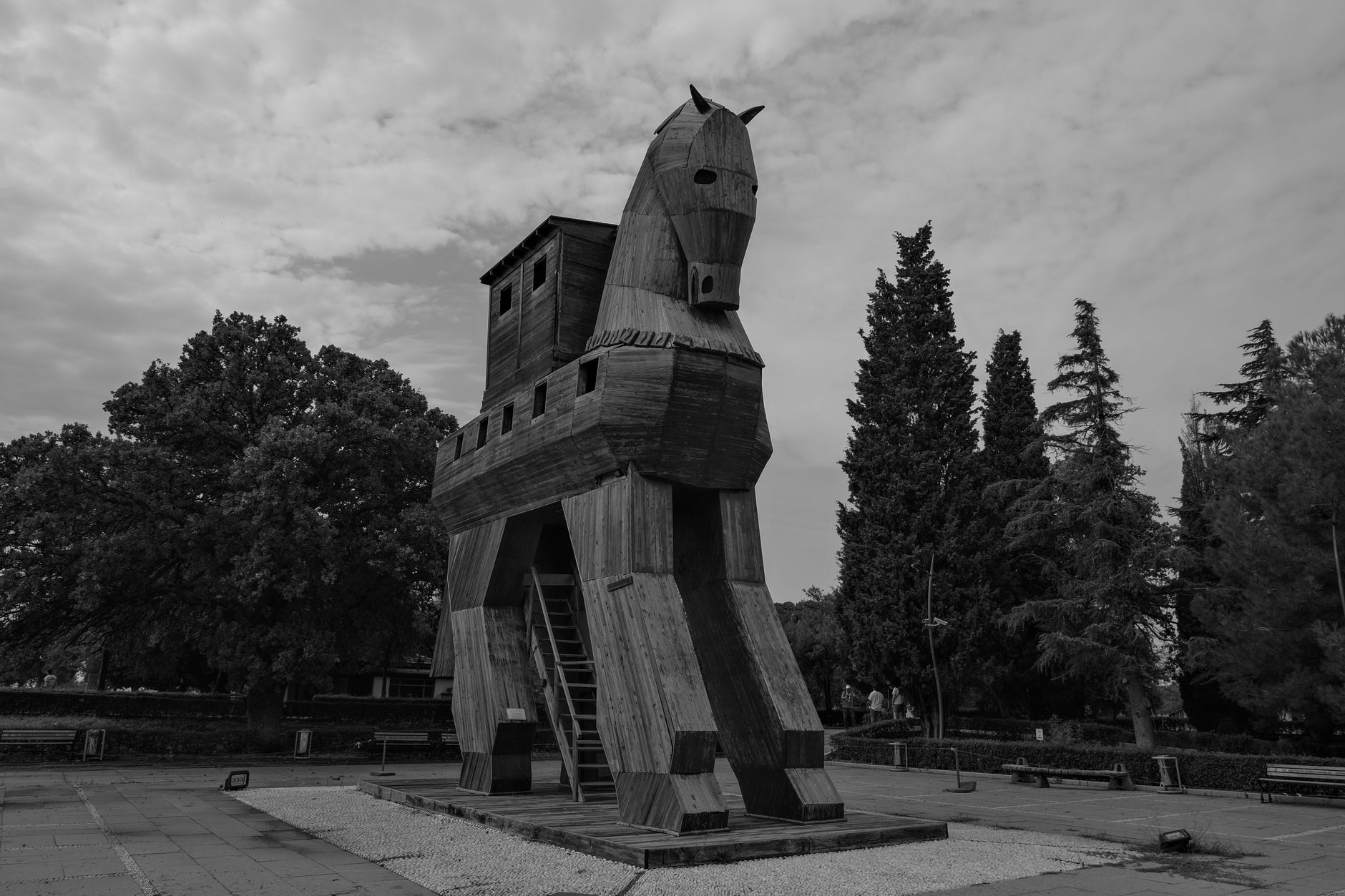
The fall of the city is the most debated event. The myth speaks of the Trojan Horse, a massive wooden structure hiding Greek soldiers. Historically, it is highly unlikely a city starved for ten years would simply drag an unknown wooden statue inside their walls. However, the Iliad ends before the horse appears; it is mentioned in the Odyssey and Virgil’s Aeneid. This suggests the horse may have been a later poetic invention or a metaphor for a siege engine. Considering Poseidon was the god of both the sea and earthquakes, the "horse" might have symbolized an earthquake that damaged Troy's walls, allowing the Greeks to breach the defenses.
Surprising Facts Most People Don't Know
One of the most surprising contradictions is that Homer describes heroes fighting with bronze weapons and using boar's tusk helmets, yet he also mentions iron, which was rare in the Late Bronze Age. Literary scholars call this an "anachronism," suggesting the poems were compiled centuries later than the war itself, mixing different eras. Furthermore, the army sizes listed in the Catalog of Ships are impossibly large, numbering over 100,000 men. Logistical analysis of the Late Bronze Age Aegean suggests the invading force was likely in the low thousands, not the massive mythological hordes.
Another shocking fact involves the location of Troy itself. For centuries, scholars thought Troy was a myth. It wasn't until Schliemann’s excavations in the 1870s that the physical remains were identified as the setting for the epic. Even more surprising, Schliemann famously found "Priam's Treasure," a cache of gold jewelry, in Troy II. However, this layer dated to 2500 BC—over 1,000 years before the supposed war. The treasure likely belonged to an earlier civilization, proving that even the archaeologists were fooled by the allure of the myth.
We also know from Hittite records that a "King of the Ahhiyawa" (likely Greeks) clashed with a ruler of "wilusa" (Troy) in western Anatolia around 1250 BC. These tablets do not mention Helen or a horse, but they confirm a militarized geopolitical rivalry between the Mycenaeans and the Hittites (Troy’s likely overlords). This external evidence confirms that a war in this region did happen, even if the gods were not watching from the clouds.
Impact and Legacy
The impact of the Trojan War extends far beyond the destruction of a single city in the Bronze Age. Whether the war included a wooden horse or not, it marked the end of the Mycenaean dominance in the region. The conflict contributed to the wider collapse of the Late Bronze Age civilizations, plunging Greece into a "dark age" that lasted centuries. This period saw a loss of writing (Linear B script) and monumental architecture until the rise of the Greek city-states (polis) generations later.
Culturally, the myth became the foundational narrative for Western literature. The Romans famously claimed descent from the Trojan survivor Aeneas, using the war to legitimize their empire. The story of the Trojan War served as a warning about the dangers of hubris (excessive pride) and the fickleness of fate. Historically, it gave the Greeks a shared ancestral memory, uniting disparate tribes through a common cultural lineage of heroes like Achilles and Odysseus.
Why This Still Matters Today
Understanding the Trojan War allows us to see how history is transformed into propaganda. In the modern era, parallels are often drawn between the "inevitability" of the Trojan War and modern geopolitical conflicts. Leaders still use myths to justify military actions, much like the Greek kings supposedly did for Helen. By studying the archaeological reality, we learn to question the narratives presented to us and look for the economic and political drivers behind the curtains of "heroic" rhetoric.
Quick Facts
- The city of Hisarlik in Turkey identifies the historical site of Troy.
- The war likely took place around 1180 BC, near the end of the Bronze Age.
- Heinrich Schliemann discovered the site in 1870.
- Homer lived roughly 400 years after the war took place.
- Hittite tablets reference "Wilusa," which linguists identify as Troy (Ilios).
- Troy VIIa shows evidence of a violent destruction and fire.
Conclusion
The Trojan War sits at the fascinating intersection of history and storytelling. While the gods and the giant wooden horse likely belong to the realm of myth, the destruction of Troy VIIa confirms a brutal conflict did occur. It was a war for wealth and power, fought by real men in bronze armor, whose story grew grander with every retelling. Do you think modern military interventions will be mythologized in a similar way thousands of years from now?