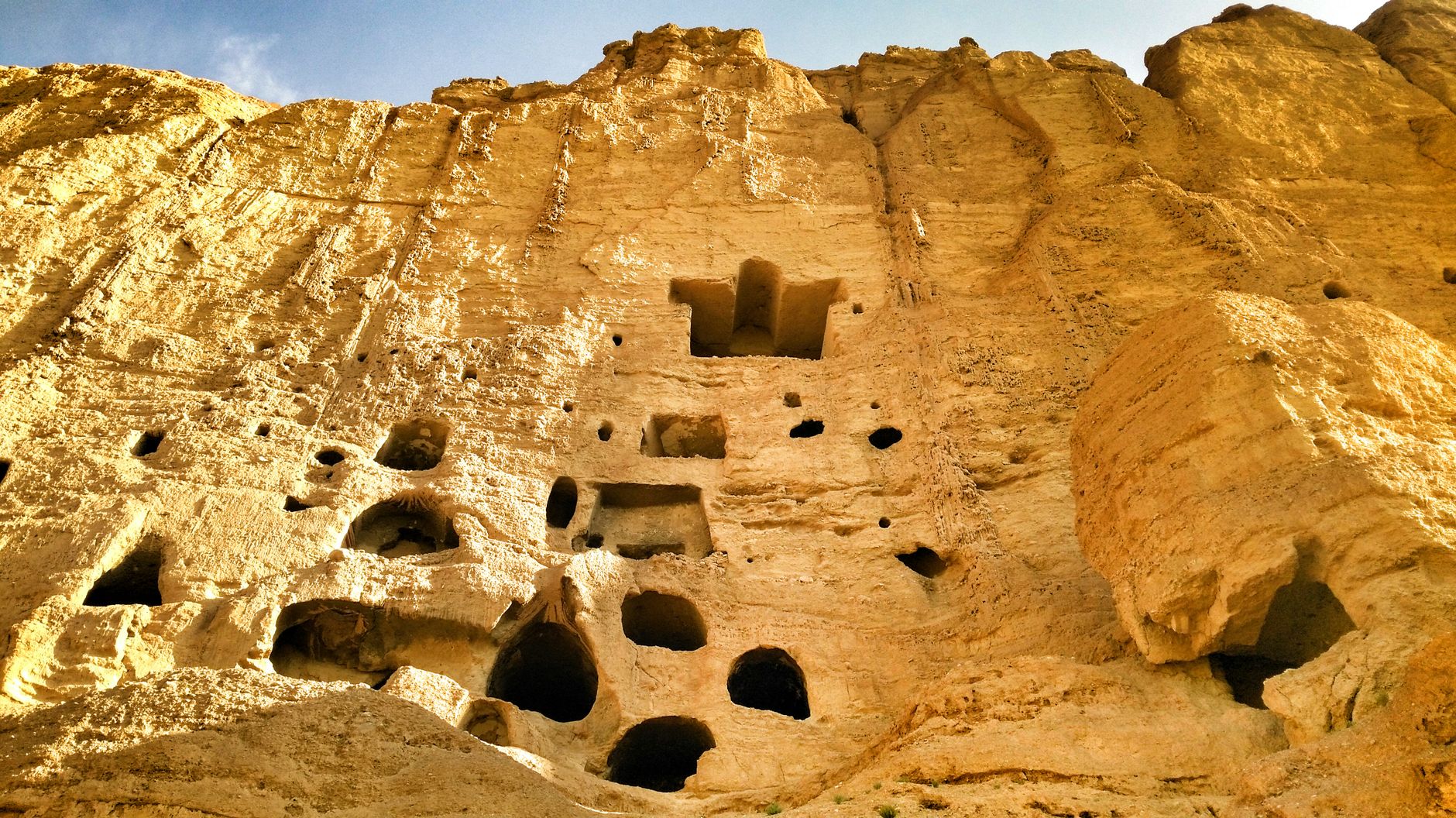
Introduction
The Silk Road was humanity's original information superhighway, connecting distant civilizations thousands of years before the internet made global communication possible. Spanning thousands of miles across treacherous deserts and towering mountains, these ancient trade routes transformed isolated societies into an interconnected web of cultures, religions, and ideas. In this article, we'll explore how this remarkable network developed, the surprising items that changed hands along its path, and why the Silk Road's legacy still matters in our modern world.
Background/Origins
The Silk Road's origins date back to China's Han Dynasty, specifically around 130 BCE, when Emperor Wu sent imperial envoy Zhang Qian on crucial diplomatic missions to establish alliances against nomadic tribes. Though largely unsuccessful in his political objectives, Zhang Qian's expeditions inadvertently opened the door to systematic east-west trade and cultural exchange that would flourish for over 1,500 years. The term "Silk Road" itself wasn't actually coined until 1877 by German geographer Ferdinand von Richthofen, who was struck by the dominance of Chinese silk in the archaeological record along these routes. This interconnected network wasn't a single highway but rather a series of branching paths connecting Chang'an (modern-day Xi'an), the capital of Han China, to the Mediterranean, passing through the Gobi Desert, Pamir Mountains, and Mesopotamia. Multiple empires facilitated these connections, including the Parthians, Kushans, and later the Romans, who eagerly coveted Chinese silk as one of their most precious luxury goods. Roman historian Pliny the Elder famously complained about the drain of Roman gold to pay for this exotic fabric, noting how it upset Rome's balance of trade with the East. Despite its name, the routes operated with seasonal timing – caravans typically traveled during spring and fall, avoiding the extreme temperatures of summer and winter on the desert routes. Merchants often organized into caravans of up to 1,000 camels for protection, though smaller groups of 30-50 animals were more common for traders without substantial capital or political patronage.
Key Events/Core Story
The most fascinating aspect of the Silk Road wasn't just the movement of goods, but the profound exchange of ideas and technologies that transformed civilizations on both ends of the trade network. Chinese silk, highly valued in Rome for its lightweight feel and brilliant sheen, became so popular that Roman senators eventually banned its use to prevent capital flight from the empire—yet demand only increased among the wealthy elite. The caravans traversing these routes didn't just carry fabric: they brought paper-making technology from China to the Islamic world, which eventually reached Europe, revolutionizing how knowledge was preserved and spread. Buddhism traveled east to China along these same routes, spreading through Central Asia before becoming one of China's major religions. Meanwhile, glassmaking techniques from the Roman Empire moved eastward, leading to the development of sophisticated glass production in China. Perhaps the most poignant testament to the Silk Road's importance occurred around 1074 CE, when the Byzantine emperor Manuel I Komnenos successfully reopened direct textile workshops to produce silk within his empire, finally breaking the Chinese monopoly after more than a millennium of dependence on imported silk along the Silk Road. Islamic Golden Age scholars like Al-Masudi (896-956 CE) documented these exchanges in his travels, noting how the flow of knowledge was as important as commercial goods. During its peak under the Tang Dynasty (618-907 CE), the network supported regular diplomatic missions between China and Persia, with Persian merchants establishing permanent communities in Chinese cities like Chang'an, where they practiced their faith and maintained their cultural traditions while contributing to China's cosmopolitan urban culture.
Surprising Facts Most People Don't Know
Contrary to popular belief, silk was far from the only valuable commodity traveling these routes – mundane items like glass, soap, wool, paper, and even manufactured goods were significant trade products. The Silk wasn't actually manufactured for export in large quantities initially – it was used as currency within China itself, and only surplus production made it to international trade. The network wasn't peaceful either despite its romanticization; caravans faced constant threats from bandits, requiring massive military escorts that significantly drove up transportation costs. Disease traveled along the routes too – the Black Death that devastated Europe in the 14th century likely followed these same paths from Central Asia. The trade wasn't directly east-west either – goods rarely traveled with a single merchant from China to Rome, but rather passed through numerous middlemen traveling shorter segments, with prices skyrocketing each time goods changed hands. Perhaps most surprisingly, women played significant roles as merchants, artisans, and even caravan leaders, particularly in Central Asian regions where they had greater economic freedom than in either China or Europe.
Impact and Legacy
The Silk Road's enduring impact on world history cannot be overstated – it fundamentally altered the economic, religious, technological, and cultural development of Eurasian civilizations. Through this network, not just goods but entire worldviews spread across continents, creating the first true global consciousness in human history. The transmission of scientific knowledge, particularly astronomy, mathematics, and medicine along these routes, created a cumulative intellectual tradition that crossed cultural boundaries. Arabic numerals traveled from India to the Islamic world and then to Europe, revolutionizing mathematics and eventually enabling the scientific revolution. Cultural borrowing became so extensive that new artistic styles emerged, like Gandharan art, which blended Greek realism with Buddhist symbolism to create entirely new aesthetic expressions in what is now Afghanistan and Pakistan. Economically, the Silk Road created the first international trade system, establishing patterns of specialization and interdependence that mirror our modern global economy. Merchants developed sophisticated financial instruments like letters of credit and bills of exchange, precursors to modern banking practices that enabled trade across vast distances. Perhaps most profoundly, the exchanges facilitated by the Silk Road demonstrated that cultural interactions could be mutually enriching rather than destructive, laying conceptual groundwork for future civilizations to understand themselves as part of a larger human community rather than isolated entities in a hostile world. These interactions planted the seeds for cosmopolitanism that would characterize major trading cities throughout history and continue to influence our diverse urban societies today.
Why This Still Matters Today
The Silk Road's legacy continues to influence our modern world in ways both obvious and subtle. China's modern Belt and Road Initiative explicitly references this historical network, aiming to recreate similar patterns of connectivity across Eurasia through massive infrastructure projects. Our current multicultural societies, with their diverse religious traditions, cuisines, and artistic influences, are direct descendants of the initial cultural exchanges that began along these ancient routes. The globalized economic system we often take for granted—despite its many problems—has conceptual roots in these early trade networks that proved civilizations could benefit from exchange rather than isolation. Modern conflicts between Western and Eastern powers can often be traced back to power dynamics first established during the golden age of Silk Road exchange, when the balance of economic power shifted between East and West. By understanding how the Silk Road successfully connected diverse cultures despite technological limitations, we gain valuable insights into addressing our contemporary challenges of global division and misunderstanding.
Quick Facts
- The Silk Road network spanned approximately 7,000 miles connecting China to the Mediterranean
- Zhang Qian's diplomatic missions began around 130 BCE during China's Han Dynasty
- At its peak in the Tang Dynasty (618-907 CE), thousands of caravans traveled the routes annually
- The Black Death that killed 75-200 million people in the 14th century traveled along Silk Road routes
- Ferdinand von Richthofen coined the term "Silk Road" in 1877, nearly 2,000 years after its establishment
- Marco Polo's famous journey along these routes between 1271-1295 CE documented the network's vibrancy
Conclusion
The Silk Road represents humanity's first great experiment in globalization, demonstrating through hardship determination and cultural resilience that distant civilizations could enrich each other through peaceful exchange. These ancient merchants, monks, and adventurers created patterns of interaction that continue to shape our world, proving that curiosity and commerce can triumph over cultural differences and geographical barriers. As we navigate our own challenges of connection vs. isolation in the 21st century, what lessons can we draw from these ancient travelers who successfully bridged civilizations across vast distances?