Introduction
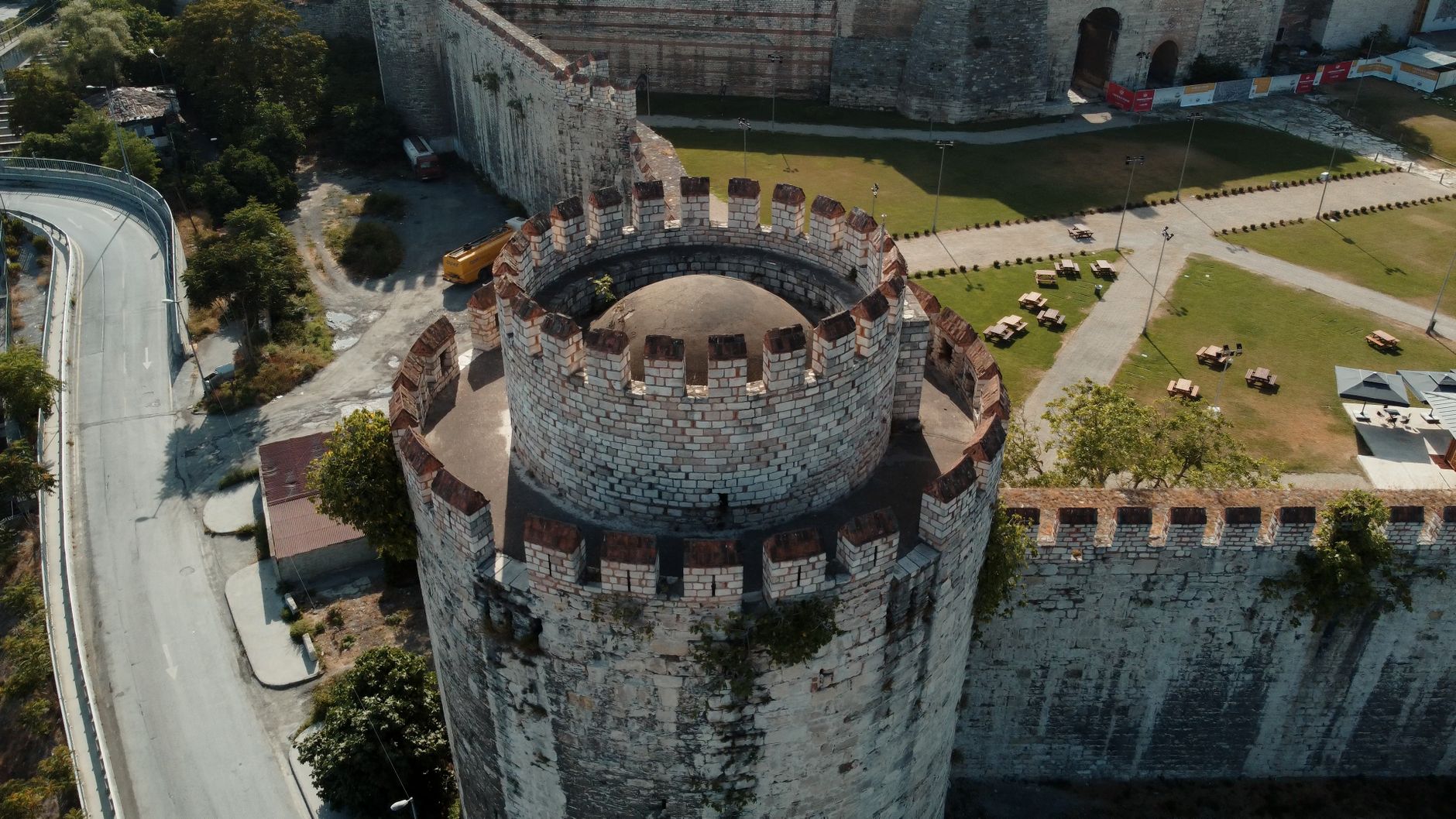
The walls of Constantinople had stood impregnable for over a millennium, shielding the capital of the Roman Empire from countless invaders. But on May 29, 1453, the impossible happened. The Ottoman Turks, led by the ambitious 21-year-old Sultan Mehmed II, breached the Theodosian Walls, bringing a definitive end to the Byzantine Empire. This article will guide you through the history of the fall of Constantinople 1453, examining the desperate defense, the military innovations that changed warfare, and the profound geopolitical shifts that resonated through the modern world.
Background: The Twilight of an Empire
By the 15th century, the Byzantine Empire was a shadow of its former glory. Once a superpower spanning the Mediterranean, it had been gradually dismembered by Crusaders, Venetians, and Seljuk Turks. When Constantine XI Palaiologos ascended the throne in 1449, he inherited a crown without a treasury and a capital that was largely empty.
The city itself was a marvel of defense, protected by the massive Theodosian Walls—a triple-layered fortification system that had repelled Arabs, Avars, and Bulgars for centuries. However, the empire’s population had dwindled to roughly 50,000 citizens, and the empire could field barely 7,000 defenders. In contrast, the Ottoman Empire was a rising powerhouse, having consolidated control over large parts of the Balkans and Anatolia.
Tensions had been high for decades. Sultan Murad II had laid siege to the city in 1422 but failed. Upon his death in 1451, his son, Mehmed II—known later as "The Conqueror"—immediately began preparations for a final, decisive assault. He viewed the capture of Constantinople as a religious and political imperative to solidify his legitimacy and unite the Turkish tribes.
Key Events: The 53-Day Siege
The siege began on April 6, 1453, when Mehmed’s massive army encircled the city. Historians estimate the Ottoman forces numbered between 80,000 and 100,000 men. More alarmingly for the defenders, Mehmed deployed a fleet of roughly 126 ships to blockade the Sea of Marmara, effectively strangling the city’s supply lines. The stage was set for a brutal conflict of attrition.
One of the most famous aspects of the history of the fall of Constantinople 1453 was the use of giant cannons. Mehmed commissioned a Hungarian engineer named Orban to cast a massive bombard that could hurl stone balls weighing nearly 1,500 pounds. For weeks, these monstrosities pounded the land walls, creating structural damage that the defenders struggled to repair overnight. Despite the bombardment, the walls held, largely due to the ferocity of the defenders led by the Genoese commander Giovanni Giustiniani Longo.
The turning point came on the night of April 28. In a stroke of tactical genius, the Ottomans dragged their ships overland, greasing the wooden runners, and launched them into the Golden Horn—the protected harbor that the defenders thought was safe due to a massive defensive chain. This maneuver trapped the Byzantine fleet and demoralized the citizens, who saw the prophecy of the city’s doom coming true.
The final assault began in the early hours of May 29, a Tuesday. Mehmed ordered a massive wave of irregular troops to tire out the defenders, followed by the elite Anatolian infantry. Finally, he unleashed the Janissaries—his crack infantry unit. During the chaos, a small gate called the Kerkoporta was left unbarred. Ottoman soldiers poured through this breach, flanking the exhausted defenders. Giustiniani was mortally wounded and fled to his ship. Realizing the end had come, Emperor Constantine XI shed his imperial regalia and charged into the onslaught, dying as a soldier rather than surrendering.
Surprising Facts Most People Don't Know
While the broad strokes of the battle are well-known, there are fascinating details often omitted from textbooks. For instance, the moon was in a state of eclipse just days before the fall, which terrified the Byzantines who interpreted it as a bad omen. On the Ottoman side, religious zeal was a primary motivator; Mehmed promised his troops unprecedented plunder of the city to sustain their morale during the grueling siege.
Another surprising fact concerns the “lost” Imperial Library. While legends say the Ottomans destroyed all books, many Greek scholars actually fled to Italy before and during the siege, carrying precious manuscripts with them. Furthermore, the defenses were not just stone; they were augmented by a secret weapon known as "Greek Fire," a primitive flamethrower that utilized a highly flammable chemical mixture, though by 1453, the配方 had been largely lost or the resources to make it were depleted.
Finally, the outcome was not inevitable. The city had sent desperate pleas for help to Western Europe. Pope Nicholas V called for a Crusade, but by the time support arrived—it was too little, too late. In fact, a small Genoese fleet arrived in the Bosphorus shortly after the city fell, only to turn around upon seeing the Ottoman flags flying atop the walls.
Impact and Legacy
The fall of Constantinople marked a seismic shift in global history. Politically, it consolidated Ottoman power in the region, allowing them to advance further into Europe and threatening the heart of Christendom. The city, renamed Istanbul, became the new capital of the Ottoman Empire and a center of Islamic culture for the next four centuries.
Economically, the event disrupted the traditional overland trade routes to Asia. The Silk Road, controlled by hostile powers, forced European merchants to seek new paths to the East. This economic pressure is a direct catalyst for the Age of Exploration; Portugal and Spain began funding voyages to find sea routes to India, leading Columbus to the Americas and Vasco da Gama to India.
Culturally, the migration of Byzantine scholars to the West reinvigorated European intellectual life. They brought with them texts of ancient Greek philosophy, science, and literature that had been preserved in Constantinople but lost to Latin Europe. This influx of knowledge is widely considered a key contributor to the Italian Renaissance, bridging the Classical world with the modern era.
Why This Still Matters Today
Understanding the facts about the fall of Constantinople 1453 helps explain modern geopolitical tensions. The conquest solidified the divide between the Christian West and the Muslim East, a religious and cultural boundary that still influences international relations today. The Hagia Sophia, the great cathedral turned mosque turned museum turned mosque again, remains a powerful symbol of this complex history and contested identity.
Moreover, the event is central to national identities. For modern Turks, it is the founding moment of their current nation-state and a source of immense pride. For Greeks and the broader Orthodox world, it remains a day of mourning known as the "Fall" or "Black Tuesday." Recognizing these differing narratives is crucial for comprehending the cultural dynamics of the Eastern Mediterranean.
Quick Facts
- Date of Fall: May 29, 1453, after a 53-day siege.
- Last Emperor: Constantine XI Palaiologos, who died fighting.
- Ottoman Sultan: Mehmed II, aged just 21 at the time of victory.
- Defender Numbers: Approximately 7,000 men (including 2,000 foreign mercenaries).
- Attacker Numbers: Estimated between 50,000 to 80,000 soldiers.
- Key Innovation: The use of massive bombards (cannons) capable of destroying city walls.
Conclusion
The history of the fall of Constantinople 1453 represents the violent collision of the medieval and modern worlds. It was the end of the Roman Empire's 1,500-year legacy and the dawn of a new era dominated by Ottoman mastery. From the sparking of the Renaissance to the rise of global maritime trade, the ramifications of that Tuesday morning echo through centuries. As we look at the walls that still stand in Istanbul today, one has to wonder: how different would the modern world look if that small gate, the Kerkoporta, had remained locked?