Introduction
History remembers the Mongols as ruthless horsemen who swept across Eurasia leaving nothing but fire in their wake. Yet, this narrative barely scratches the surface of one of the most sophisticated and complex empires the world has ever seen. From the humble steppes of Mongolia to the borders of Europe and the heart of China, their influence reshaped the global map. This article explores the history of the Mongol Empire, detailing its rapid conquests, surprising cultural contributions, and the internal struggles that led to its dramatic collapse.
The Rise from the Steppes
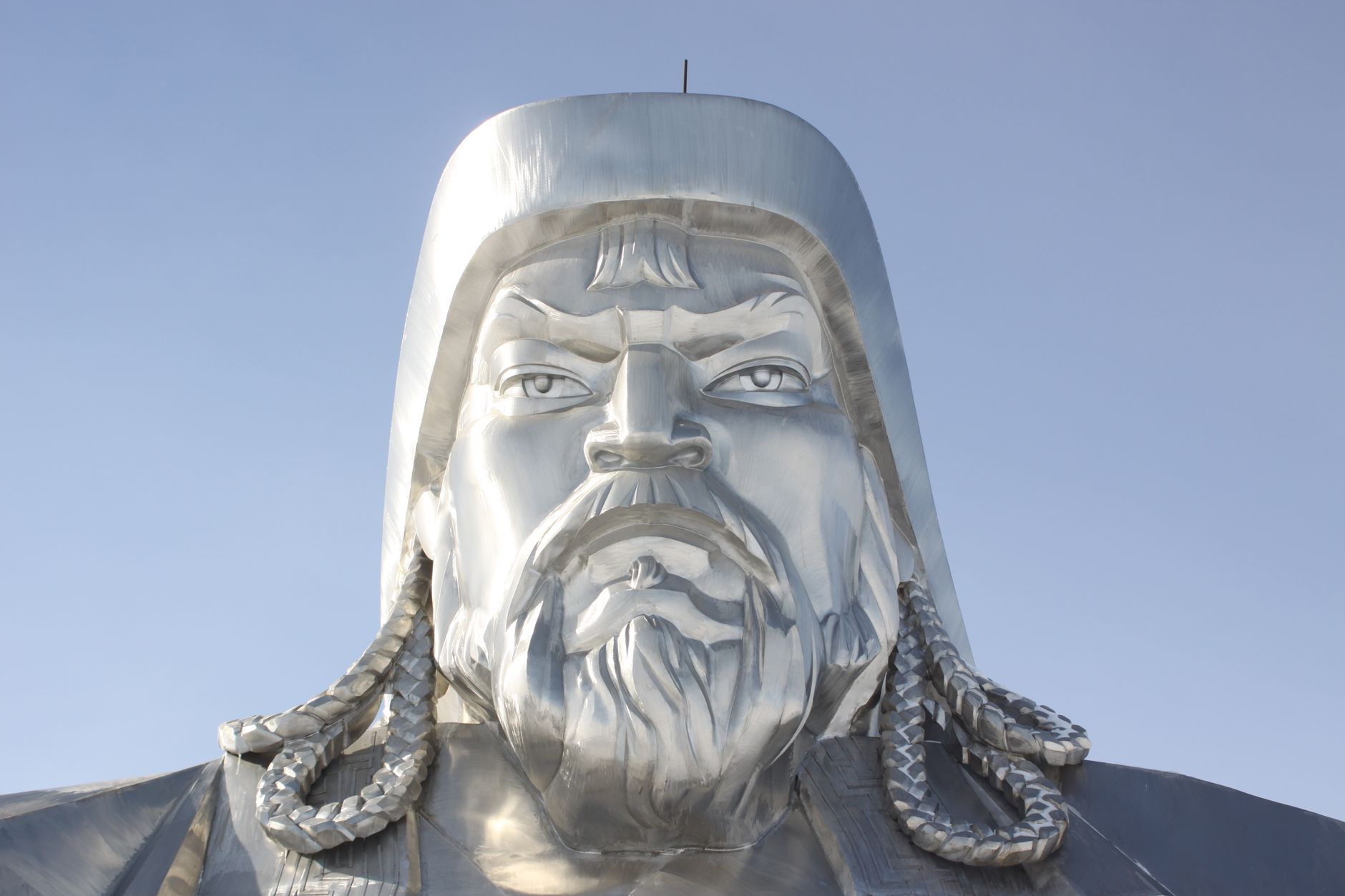
The story begins in the harsh, windswept grasslands of Central Asia in the late 12th century. Born around 1162 as Temüjin, the man who would become Genghis Khan endured a childhood marked by poverty, slavery, and the betrayal of his own clan. Survival on the steppe was brutal, but it forged a leader of unparalleled resilience and strategic genius. By 1206, Temüjin had managed to unite the warring nomadic tribes of the northeast Asian steppe. At a massive assembly known as a Kurultai, he was bestowed the title of "Genghis Khan," meaning "Universal Ruler."
This unification was the catalyst for the Mongol Empire. Genghis Khan immediately implemented a radical restructuring of Mongol society. He broke down the old tribal loyalties that had caused generations of infighting and organized his army into a decimal system—units of ten, one hundred, one thousand, and ten thousand. This created a highly disciplined military machine where loyalty was owed to the Khan and the unit, not to a specific bloodline. Furthermore, he adopted a writing system based on the Uyghur script, allowing the Mongols to record laws and communications for the first time. These administrative innovations were just as important as their legendary archery skills in building an empire.
The Era of Conquest and Expansion
The momentum generated by Genghis Khan carried the Mongol armies across the known world with terrifying speed. Their military strategy relied heavily on mobility and psychological warfare. Unlike traditional armies that relied on slow-moving supply lines, Mongol cavalrymen could travel up to 100 miles a day, living off their horses and hunting as they moved. They struck with lightning speed, often encircling enemies who were accustomed to static siege warfare. By the time of Genghis Khan’s death in 1227, the Mongols had conquered much of Northern China, the Western Xia dynasty, and the vast Khwarezmian Empire in Persia.
Under his successors—Ögedei, Möngke, and ultimately Kublai Khan—the expansion continued and reached its zenith. The empire expanded westward into Russia and Eastern Europe, crushing Hungarian and Polish armies at the Battle of Legnica in 1241. Simultaneously, they pushed south and east, eventually conquering the Song Dynasty in China. The Mongols established the Yuan Dynasty in 1271, with Kublai Khan as its first emperor. This era saw the destruction of Baghdad in 1258, a pivotal event that effectively ended the Islamic Golden Age. At its peak, the Mongol Empire was the largest contiguous land empire in history, stretching from the Pacific Ocean to Eastern Europe, facilitating unprecedented contact between East and West.
Surprising Facts Most People Don't Know
While the Mongols are often painted purely as destroyers, they were actually responsible for fostering cultural exchange on a scale previously unseen. One surprising fact is their policy of religious tolerance. Because the Mongols were animists and shamanists, they did not have a state religion to impose. They actively patronized Buddhism, Islam, Christianity, and Taoism, often exempting religious leaders of all faiths from taxes. This pragmatic approach helped stabilize their diverse territories.
Another misconception is that they completely stifled civilization. In reality, the Mongol era, known as the Pax Mongolica (Mongol Peace), made travel safer than it had been in centuries. They established the Yam, a postal relay system that allowed messages and goods to travel across the empire at incredible speeds—similar to a medieval Pony Express. Furthermore, the Mongols practiced meritocracy. Unlike feudal Europe where birthright determined status, a common shepherd could rise to become a general based solely on skill and loyalty. This meritocratic system extended to their administration, where they often utilized foreign bureaucrats—such as Persians and Chinese—to manage the complex economies they had conquered.
Impact and Legacy
The legacy of the Mongol Empire extends far beyond their battle tactics. Perhaps their most enduring contribution was the revitalization of the Silk Road. Under Mongol rule, trade routes were unified and protected, allowing for the free flow of goods, technologies, and ideas between East and West. It was during this time that technologies like gunpowder, paper, and the compass began to move from China toward Europe, laying the groundwork for the Renaissance. Famously, the Venetian merchant Marco Polo traveled the Silk Road during the Yuan Dynasty, documenting his experiences which sparked European interest in Asia.
However, their impact was also catastrophic in terms of demographics. Historical estimates suggest the Mongol conquests may have reduced the world’s population by up to 11% due to warfare, famine, and the spread of disease. The destruction of irrigation systems in Mesopotamia fundamentally altered the agriculture of the region for centuries. Additionally, the empire is linked to the spread of the bubonic plague. As trade caravans moved freely across the Eurasian steppe, they carried infected fleas on rodents from Asia to Europe, triggering the Black Death that would later decimate the continent. Thus, the Mongol Empire was a dual-edged sword: a bridge for civilization and a vector for destruction.
Why This Still Matters Today
Understanding the Mongol Empire is crucial for comprehending the modern geopolitical landscape of Eurasia. Many modern borders and national identities in Central Asia, Russia, and the Middle East were shaped directly by the Mongol invasions. The concept of diplomatic immunity, a cornerstone of international law today, can trace its roots back to the Mongols, who treated the mistreatment of envoys as a casus belli—a justification for war. Furthermore, the globalization we experience today began in the 13th century with the unification of the Mongol territories; they were the first to knit the world into a singular, interactive system. Their rise and fall offer a timeless lesson in the dangers of overextension and the complexity of governing a diverse, multicultural state.
Quick Facts
- 1206: Genghis Khan unites the Mongol tribes and establishes the empire.
- 1279: Kublai Khan completes the conquest of China, founding the Yuan Dynasty.
- 1260: The Battle of Ain Jalut marks the first major Mongol defeat by the Mamluks of Egypt.
- 1296: The Ilkhanate in Persia converts to Islam, marking a cultural shift.
- 1368: The Ming Dynasty drives the Mongols out of China, ending the Yuan Dynasty.
- 24 million sq miles: The approximate size of the empire at its peak.
Conclusion
The Mongol Empire was a force of nature that rewrote the rules of war and governance. While their conquests were bloody, the era of stability they enforced connected humanity in ways previously unimaginable. They brought the East and West together, forging the first version of a globalized economy. However, the lack of a clear succession system eventually tore the empire apart, proving that military might alone cannot sustain a civilization without stable institutions. As we look at the interconnected modern world, we are still walking the roads the Mongols paved. Do you think the world would be more or less connected today if the Mongol Empire had never existed?