Introduction
We often picture pirates through the lens of Hollywood films: parrots on shoulders, buried treasure maps marked with an “X,” and swaggering rebels living free on the high seas. However, the real history of the Golden Age of Piracy is far grittier, more political, and surprisingly more structured than the fiction suggests. Spanning roughly from the 1650s to the 1730s, this era was not just about crime; it was a direct response to global economic shifts and harsh maritime labor conditions. This article explores the true origins of piracy, the rise of the pirate republic, and the surprising democratic systems that governed these outlaw societies.
Background and Origins of the Golden Age
To understand the explosion of piracy in the early 18th century, we must look at the geopolitical landscape of the late 17th century. The roots of the Golden Age lie in the transition from state-sponsored privateering to outright piracy. During times of war, European powers like England and France issued "letters of marque" to privateers, legalizing their attacks on enemy ships in exchange for a share of the profits. Thousands of sailors made their living this way.
The turning point came with the signing of the Treaty of Utrecht in 1713, which ended the War of the Spanish Succession. Suddenly, peace broke out across Europe, and tens of thousands of privateers found themselves unemployed. With their skills refined and no legal targets, many turned to piracy out of necessity. The Caribbean, a hub of lucrative Spanish trade routes, became the epicenter of this new lawlessness.
Simultaneously, living conditions for sailors in legitimate navies and merchant fleets were brutal. Wages were low, discipline was violent, and death from disease or accident was common. For many men (and women), piracy offered a desperate escape from a life of servitude. As the historian Marcus Rediker noted, pirates were often sailors who had "gone on the account" not just for gold, but to reclaim their autonomy from tyrannical captains.
The Pirate Republic and Key Events
The most fascinating chapter of this era occurred between 1716 and 1718, centered in Nassau on the island of New Providence in the Bahamas. This period saw the formation of an unofficial "Pirate Republic." It was not a nation in the traditional sense, but a haven where outlaws could live, trade, and repair ships without fear of immediate arrest.
Key figures like Benjamin Hornigold, Henry Jennings, and later Edward "Blackbeard" Thatch and "Black Sam" Bellamy turned Nassau into a bustling maritime hub. They operated under a loose, de facto government that defied British rule. Unlike the rigid hierarchies of the Royal Navy, this pirate community was surprisingly egalitarian. Crews elected their captains and could depose them by vote if they abused their power. This created a sense of loyalty and efficiency that terrified the British Crown.
One of the most significant events of this period was the blockade of Charleston, South Carolina, in 1718. Led by Blackbeard, this brazen act effectively held one of the busiest ports in the American colonies hostage. The pirates demanded a chest of medicine as ransom, showcasing their power to disrupt commerce even on the mainland. However, the golden era of Nassau was short-lived. In 1718, King George I offered the King\'s Pardon—a full amnesty for pirates who surrendered. While many accepted, those who returned to piracy faced a new, determined enemy: Governor Woodes Rogers, who was sent to Nassau to crush the republic.
Surprising Facts Most People Don't Know
One of the biggest misconceptions is that pirates were lawless anarchists. In reality, they operated under strict legal codes known as the "Articles of Agreement." These constitutions were drafted and signed by every crew member before a voyage and dictated everything from how loot was divided to the punishment for cheating. Many articles even instituted early forms of workers\' compensation, offering payment for injuries such as the loss of a limb.
Another surprising fact is the racial diversity of pirate crews. While the merchant navy and Royal Navy were strictly segregated, pirate ships were often multicultural spaces. Historians estimate that up to 30% of pirate crews during the Golden Age were of African descent, including many escaped slaves who found freedom among the outlaws. Pirates like Black Caesar are documented as having significant power and influence within their crews.
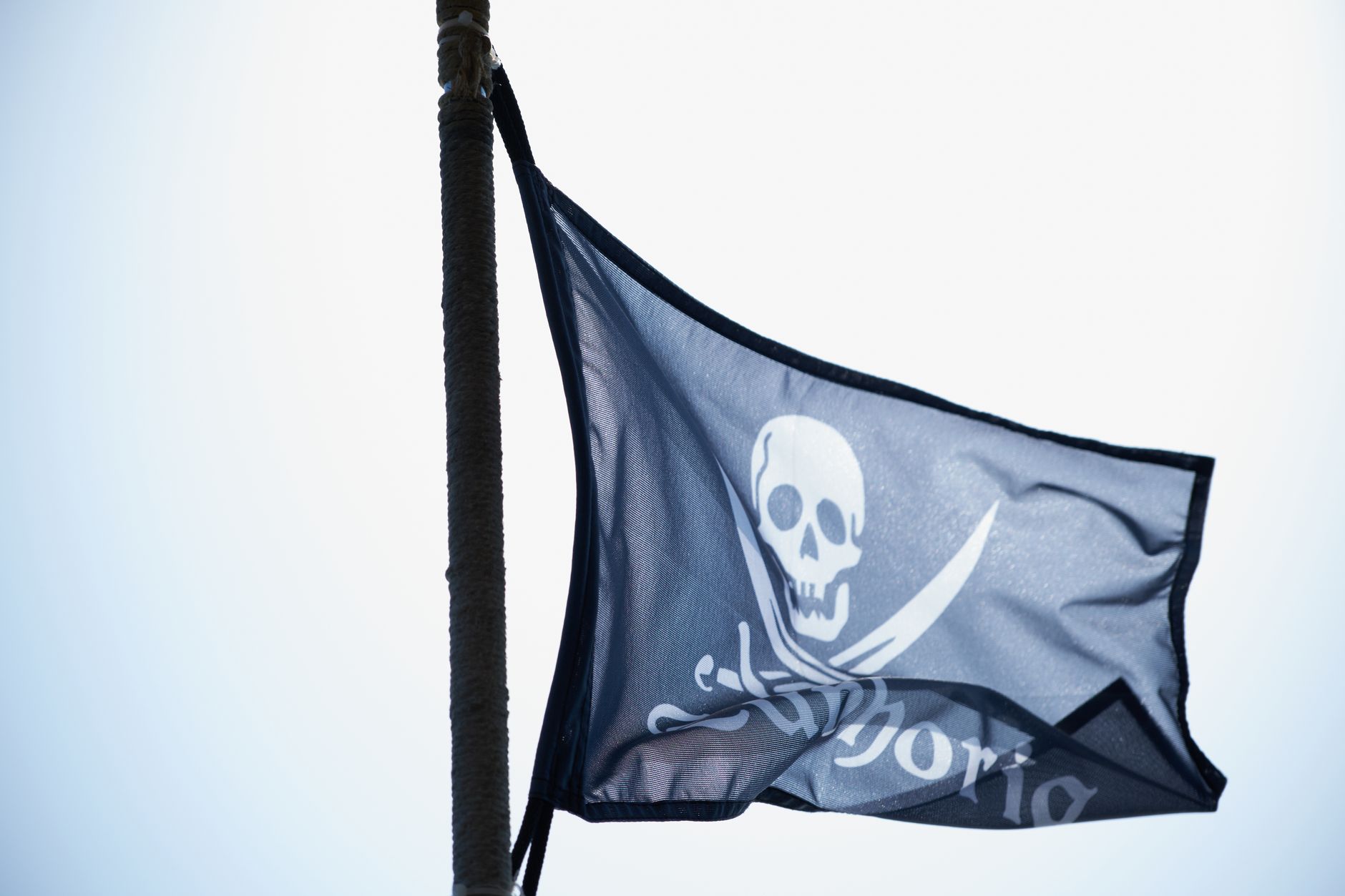
Contrary to popular belief, walking the plank was an exceedingly rare punishment. It was largely a fiction created by 19th-century writers like Robert Louis Stevenson. Real pirate punishments were more direct and violent, such as marooning (stranding a culprit on a desert island) or flogging. Furthermore, the famous "Jolly Roger" flag wasn't just one design; pirates used a variety of black flags featuring skulls, skeletons, and hourglasses to psychologically terrify their victims into surrendering without a fight.
Impact and Legacy
The Golden Age of Piracy fundamentally altered maritime law and naval warfare. The sheer economic cost of piracy forced the British Empire to invest heavily in a permanent, global naval presence. The brutal crackdown by figures like Woodes Rogers and subsequent public trials in places like Newport, Rhode Island, and Charleston served as a grim deterrent. The public hangings of pirates like William Fly in Boston were spectacles designed to warn sailors against the allure of the outlaw life.
Culturally, the pirates left a lasting legacy as symbols of resistance against authority. Their rejection of the established social order resonated with the working class of the 18th century and continues to captivate us today. The image of the pirate has evolved from a bloodthirsty criminal in contemporary newspapers to a romantic rebel in modern pop culture. However, the real history of the Golden Age of Piracy serves as a reminder of the harsh economic realities that drove men to the sea and the brutal measures empires took to maintain control of trade.
Why This Still Matters Today
The history of piracy offers a unique lens through which to view modern economic disparities and labor disputes. The pirates of the 1700s were, in many ways, the first organized labor movement striking back against oppressive working conditions. Their system of democratic elected leadership and equitable profit-sharing was revolutionary at a time when monarchies ruled the world. Today, understanding why these sailors turned to piracy helps us analyze modern issues of wealth inequality and the gig economy. It challenges us to ask why people choose to operate outside the law and how societies can integrate disgruntled workers rather than simply criminalizing them.
Quick Facts
- The Golden Age of Piracy is generally defined as lasting from 1650 to 1730.
- The Treaty of Utrecht was signed in 1713, causing mass unemployment among privateers.
- Stede Bonnet, known as the "Gentleman Pirate," was a wealthy plantation owner who turned to piracy in 1717.
- Blackbeard’s blockade of Charleston, South Carolina, occurred in May 1718.
- Women pirates Anne Bonny and Mary Read were tried in Jamaica in 1720.
- Bartholomew Roberts was the most successful pirate of the era, capturing over 400 ships.
Conclusion
The Golden Age of Piracy was not merely a chapter of colorful outlaws and buried gold; it was a complex socio-economic phenomenon driven by war, unemployment, and a desire for freedom. While the pirates of the 1700s are often romanticized, their real history reveals a brutal, organized, and surprisingly democratic society that challenged the world’s greatest empires. Ultimately, their story is a testament to the human spirit’s resistance to oppression. Given the choice between a life of servitude and the dangerous freedom of piracy, which would you have chosen?