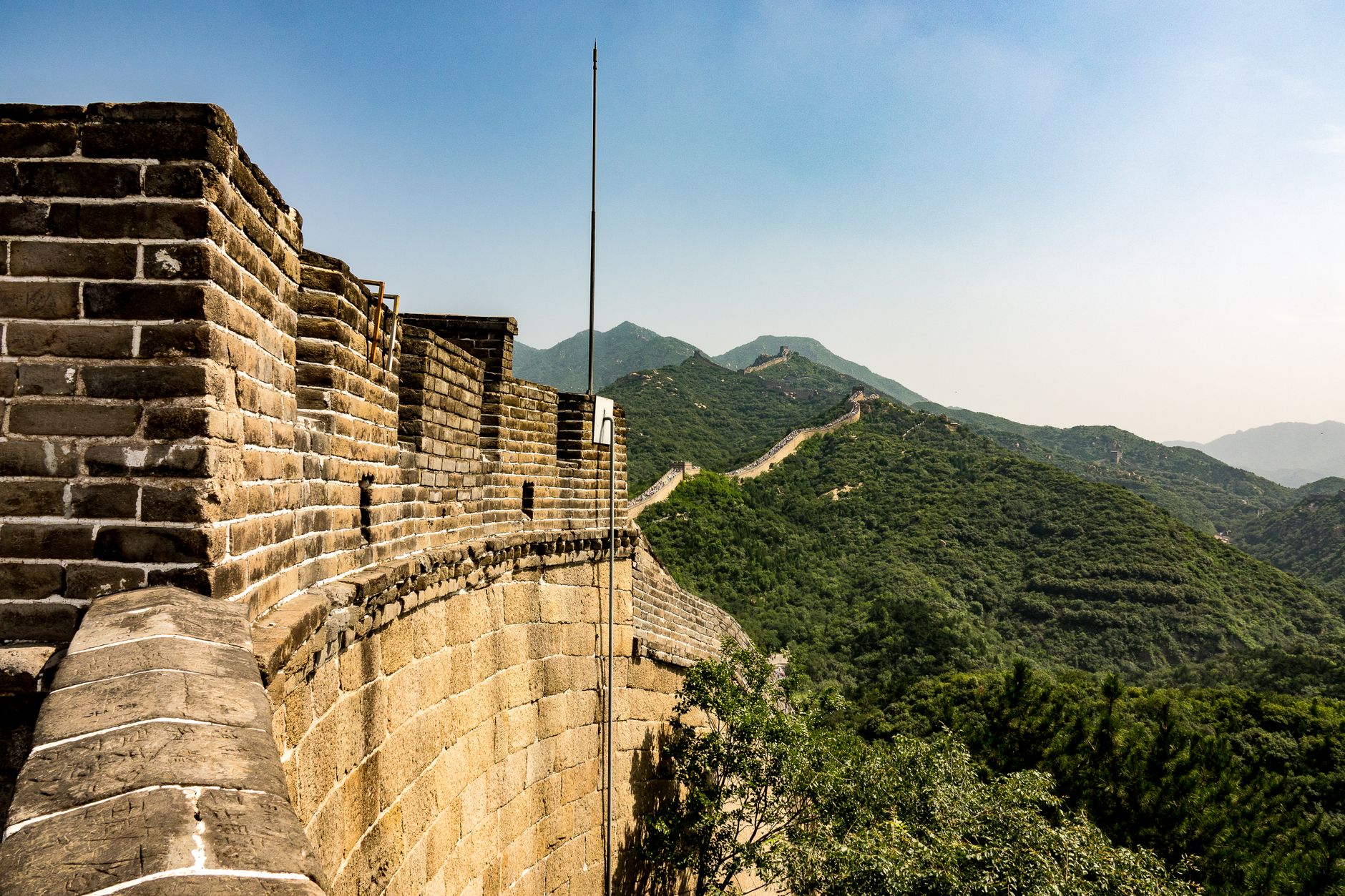
A 6,000-Mile Monster Emerges
In 221 BC, the first Emperor of China, Qin Shi Huang, set out to build a series of fortifications to protect his empire from the 'barbarian' Mongols and Xiongnu nomads. This behemoth construction project, known as the Great Wall of China, would go on to become one of the most impressive architectural achievements in history - and one of the most deadly.
You might assume the Great Wall was built as a single, cohesive project to keep invaders out, but nothing could be further from the truth. Qin Shi Huang's wall was actually a series of separate fortifications built by various local states. It wasn't until the Han Dynasty (206 BC - 220 AD) that these walls were connected under the command of Emperor Wu. This wall was made primarily of rammed earth, wood, and stone, with watchtowers and beacon towers every 200-300 meters.
The Setup: War, Politics, and Human Cost
The Great Wall is often seen as an engineering marvel, but its construction was a brutal, deadly process that claimed thousands of lives. Here's the thing most people miss: the wall wasn't just a barrier against invaders - it was also a tool of control, used by the Chinese government to quell rebellions and expand its territory. The Han Dynasty, for example, built the wall to protect its Silk Road trade routes from Central Asian raiders. The Mongols, under Kublai Khan, extended the wall to protect their northern borders.
In the 16th century, the Ming Dynasty rebuilt the wall on a grander scale, using stone and brick to create a barrier over 6,000 miles long. This was a testament to the power and wealth of the Chinese state, but also a symbol of its paranoia and fear. The wall's design took into account the local geography, with steep inclines and deep trenches to slow down invaders. But why did nobody stop them?
I've always been struck by how this ancient project seems to embody the contradictions of human nature - a desperate desire for security and control, alongside an insatiable need for innovation and expansion.
The Heart of the Story: Politics, Power, and the Human Cost
The Great Wall was more than just a physical barrier - it was a symbol of imperial power. The wall's watchtowers and beacon towers were used to convey messages between different military units, enabling the Chinese government to rapidly respond to threats.
As the wall grew, so did the stories of its brutality. Thousands of laborers died during its construction, often forced to work in brutal conditions, exposed to disease and starvation. 'The Great Wall is a great monument of China, built at the cost of thousands of human souls,' wrote the Chinese historian, Xu Zhen. The Han Dynasty was notorious for using 'punitive colonies' to settle convicts, prisoners of war, and even slaves along the wall.
This sounds exactly like something you'd see on Twitter today - hashtags and outrage surrounding labor exploitation, corruption, and government brutality. But this was ancient China, where the line between politics and violence was blurred beyond recognition.
The Part Nobody Talks About: Corruption, Incompetence, and Injustice
You might assume the Great Wall was a proud national achievement, but the reality is more complicated. Many sections of the wall fell into disrepair within decades of their construction, due to poor materials and shoddy workmanship. This wasn't just a matter of incompetence - it was a symptom of corruption and abuse of power.
One of the most surprising facts about the Great Wall is that many local states refused to contribute to the construction project, or even deliberately sabotaged it. These were not insignificant rebellions, but major uprisings that threatened the stability of the Chinese state.
The Human Cost: Life Behind the Wall
But who were the people behind the wall? What was their life like, living alongside this monstrous fortress? Take the story of a local farmer, whose village was forcibly relocated to make way for the wall.
'In the spring of 1655, our village was ordered to move to the north bank of the Yellow River. We were told that our new homes would be built 'within sight of the wall', but when we arrived, we found that the land was barren and unworkable,' wrote the Ming Dynasty historian, Wang Tingxian. This kind of forced relocation was not an isolated incident, but a common practice used by the Chinese government to control its population and expand its territory.
Why It Still Echoes Today
You might think that the Great Wall is a relic of ancient history, but its impact still resonates today. As a symbol of imperial power, the Great Wall represented the darker aspects of human nature - our desire for control, our fear of the unknown, and our willingness to sacrifice others for the benefit of a few.
Think about it this way: when we see social media posts about refugees, displaced people, or labor rights, we often react with outrage and empathy. Why not do the same for the 10,000 laborers who lost their lives building the Great Wall?
Quick Facts
- The Great Wall of China is approximately 13,170 miles (21,196 km) long.
- The wall took over 2,000 years to build, with different dynasties contributing to its construction.
- The Ming Dynasty built over 4,000 miles of new wall, using stone and brick for the first time.
- Thousands of lives were lost during the construction of the Great Wall.
- The wall was built to protect the Chinese state from external threats, but also served as a tool of control and expansion.
Final Thought
The Great Wall of China remains one of the most enigmatic architectural achievements in human history - a monstrous fortress built on the blood and sweat of thousands. As we gaze up at its imposing structures, let us not forget the people behind the wall - the laborers, the victims, and the rebels. Their stories remind us that history is not just about monuments and empires, but about human lives, human struggles, and human triumphs.
Sources & Further Reading
- Wikipedia: Great Wall of China - A comprehensive article covering the history, construction, and purpose of the Great Wall.
- World History Encyclopedia: Ancient China - A detailed entry on ancient China, including its politics, society, and culture.
- Britannica: Han Dynasty - A concise article on the Han Dynasty's role in building the Great Wall.
- Wikipedia: Qin Shi Huang - A biography of the first Emperor of China and his role in building the Great Wall.
- World History Encyclopedia: Silk Road - An entry on the ancient trade routes that connected China to the rest of Asia.
- Britannica: Ming Dynasty - A brief introduction to the Ming Dynasty's achievements and legacy.
