Introduction
For over six centuries, the Ottoman Empire stood as a colossal superpower bridging the East and West. It was a realm of sultans, janissaries, and immense architectural achievement that reshaped the global map. This guide explains the full history of the Ottoman Empire, from its humble tribal origins to its dramatic collapse. You will discover the key events, surprising facts, and lasting legacies of this historical giant.
The Origins of a Dynasty
The story begins in 1299 with a man named Osman I, the leader of a minor Turkish tribal group in northwestern Anatolia. At the time, the region was a fractured landscape ruled by the crumbling Byzantine Empire. Osman declared independence from the Seljuk Turks, marking the birth of a new dynasty that would bear his name.
Osman and his followers were known as Gazis, or warriors for the faith. They expanded their territory by absorbing neighboring beyliks and raiding Byzantine lands. This early period was defined by pragmatic leadership and a unique ability to integrate diverse populations. By the time of Orhan, Osman’s son, the Ottomans had captured their first major city, Bursa, which became their capital in 1326.
The empire’s expansion was not accidental. It was fueled by a sophisticated military organization and a strategic location. They controlled the vital Dardanelles strait, which connected Europe to Asia. By crossing into the Balkans in the mid-14th century, the Ottomans set their sights on the ultimate prize: the Christian stronghold of Constantinople.
Key Events and the Empire’s Peak
One of the most significant moments in world history occurred on May 29, 1453. Sultan Mehmed II, known as the Conqueror, breached the massive walls of Constantinople after a 53-day siege. Using massive cannons that could hurl stone balls over a mile, the 21-year-old Sultan brought an end to the Byzantine Empire. The city was renamed Istanbul and became the new capital, transforming into a cosmopolitan hub of culture and trade.
Following this victory, the empire entered its golden age under Suleiman the Magnificent, who ruled from 1520 to 1566. His reign marked the zenith of Ottoman military, political, and economic power. Suleiman expanded the empire deep into Europe, capturing Belgrade and Budapest, and laid siege to Vienna in 1529. He also overhauled the legal system, earning the title Kanuni, or "The Lawgiver."
However, the failed Siege of Vienna in 1683 signaled a turning point. The Ottoman defeat at the hands of the Holy League marked the beginning of a slow but steady decline. The empire lost territory in Hungary and faced increasing internal strife. The once-feared militarytechnology began to lag behind the rapidly modernizing nations of Europe. By the 19th century, the Ottomans were known as the "Sick Man of Europe," struggling to maintain control over its vast and rebellious territories across the Balkans and the Middle East.
Surprising Facts Most People Don't Know
One of the most misunderstood aspects of the Ottoman Empire is its military recruitment. For centuries, the elite infantry known as the Janissaries were actually recruited through the devshirme system. This was a "blood tax" where Christian boys in the Balkans were taken, converted to Islam, and trained to become loyal soldiers and bureaucrats. Unlike typical soldiers, they were banned from marrying until retirement and formed a powerful political caste that eventually challenged the Sultans.
Another surprising fact is the empire's role in the history of coffee. While coffee originated in Ethiopia, it was the Ottomans who popularized coffeehouses in the 16th century. The first coffeehouse in Istanbul opened in 1555. These establishments became centers of social life and political debate. When the Ottomans failed to capture Vienna in 1683, they left behind sacks of coffee beans, sparking the coffee culture that spread across Europe.
Contrary to the popular belief of religious oppression, the Ottomans practiced a remarkable level of religious tolerance for the time. They utilized the Millet system, which allowed religious minorities—Jews and Christians—to govern their own affairs under their own religious laws. This made the Ottoman Empire a safe haven for Jews expelled from Spain during the Inquisition in 1492.
Impact and Legacy on the Modern World
The dissolution of the Ottoman Empire after World War I had profound consequences that are still felt today. In 1920, the Treaty of Sèvres and later the Treaty of Lausanne carved up the empire's former territories into modern nation-states. The arbitrary drawing of borders in the Middle East by British and French diplomats created the geopolitical landscape of Iraq, Syria, Lebanon, and Jordan that we see on news maps today.
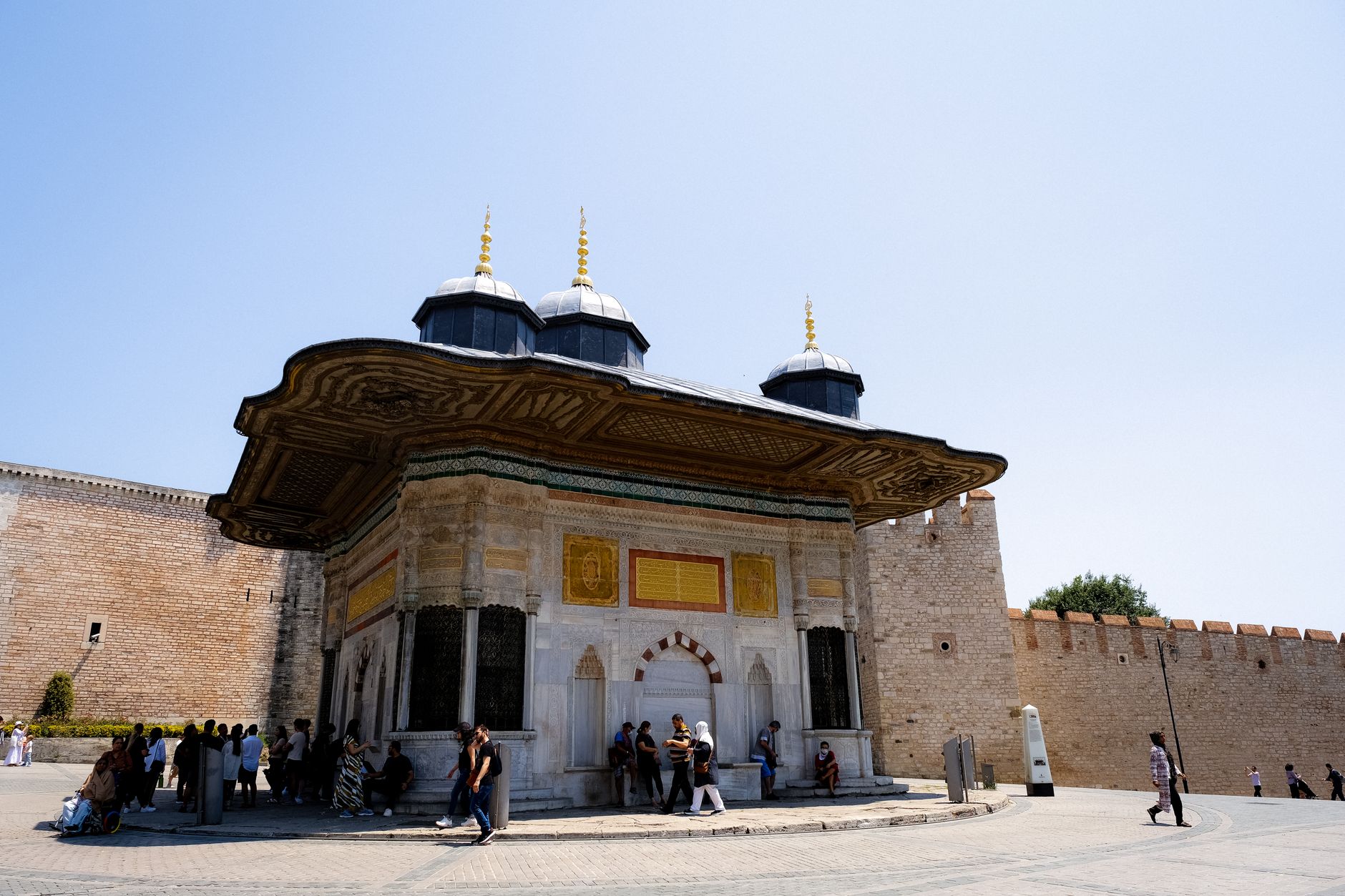
Culturally, the legacy is equally significant. Ottoman architecture, characterized by domes and minarets, left a mark ranging from the mosques of Sarajevo to the bridges in Mostar. In Turkey, the successor state to the empire, Mustafa Kemal Atatürk abolished the Sultanate and Caliphate in the 1920s. He secularized the state and shifted the alphabet from Arabic script to the Latin alphabet, but the cultural memory of the empire remains a central part of Turkish identity.
Even in the United States, the Ottoman influence exists subtly. The concept of the "turkey" bird is actually named after the country, due to early trade routes that confused guinea fowl from the Ottoman Empire (then called "Turkey-cock") with the North American bird.
Why This Still Matters Today
Understanding the history of the Ottoman Empire is crucial for comprehending current international conflicts. The tensions in the Balkans, such as the Bosnian War in the 1990s, have roots in the historical administrative divisions of the Ottoman era. Similarly, the Kurdish question, spanning Turkey, Iraq, and Syria, is a direct result of the collapse of Ottoman administrative structures and the subsequent drawing of borders that ignored ethnic realities.
The empire also serves as a historical case study for managing diversity. The Ottoman ability to rule a multi-ethnic, multi-religious empire for six centuries is a subject of intense study. It challenges modern assumptions that nations must be homogenous to be stable, showing that decentralized governance can sometimes work on a massive scale.
Quick Facts
- The Ottoman Empire was founded in 1299 and lasted for 623 years.
- At its peak under Suleiman the Magnificent, the empire controlled approximately 2 million square miles.
- The fall of Constantinople in 1453 is often cited as the end of the Middle Ages.
- The empire officially capitulated and signed the Armistice of Mudros on October 30, 1918.
- The famous Topkapi Palace in Istanbul housed over 4,000 people at its peak.
- The Ottoman Sultan was also the Caliph, the religious leader of all Sunni Muslims, from 1517 until 1924.
Conclusion
The history of the Ottoman Empire is a saga of incredible rise, complex administration, and a slow, painful unraveling. It shaped the religious, cultural, and physical boundaries of three continents. Without the Ottomans, the modern world's map, culture, and even our morning coffee routine would look vastly different. Considering its massive impact, why do you think Western history books often spend so little time on this 600-year empire?