Introduction
When the plague ships docked in Sicily in 1347, they carried more than just a deadly disease; they delivered a shockwave that would ultimately dismantle the medieval world. The Black Death didn’t just kill people—it killed the feudal system, shattered religious authority, and rewrote the rules of the European economy. This article explores the harrowing history of the pandemic and explains the profound, lasting consequences that birthed the modern world.
Background and Origins
The catastrophe began in the steppes of Central Asia, where the bacterium Yersinia pestis circulated among rodent populations. This microscopic killer hitched a ride on the fleas of black rats, stowing away on the caravans that traversed the Silk Road. By the 1340s, the disease had reached the Crimean Peninsula, a critical trading hub controlled by the Mongols.
Historians often cite the siege of Caffa in 1347 as the spark that ignited Europe's nightmare. According to the Gabriele de' Mussis, a notary from Piacenza, Mongol forces catapulted plague-infested corpses over the city walls to infect the Genoese defenders inside. While biological warfare was likely not the sole cause of transmission, the terrified Genoese traders fled Caffa by sea.
These merchant ships carried the death sentence to the Mediterranean. In October 1347, the galleys arrived in Messina, Sicily. The horrified port authorities, noticing sailors dying with blackened swellings (buboes) in their groins and armpits, forced the ships back to sea, but the damage was done. The plague rapidly spread to Genoa and Venice, then marched inland like an occupying army, reaching France, Spain, and England by the summer of 1348. By 1350, it had Scandinavia and Russia in its grip.
Key Events and The Core Story
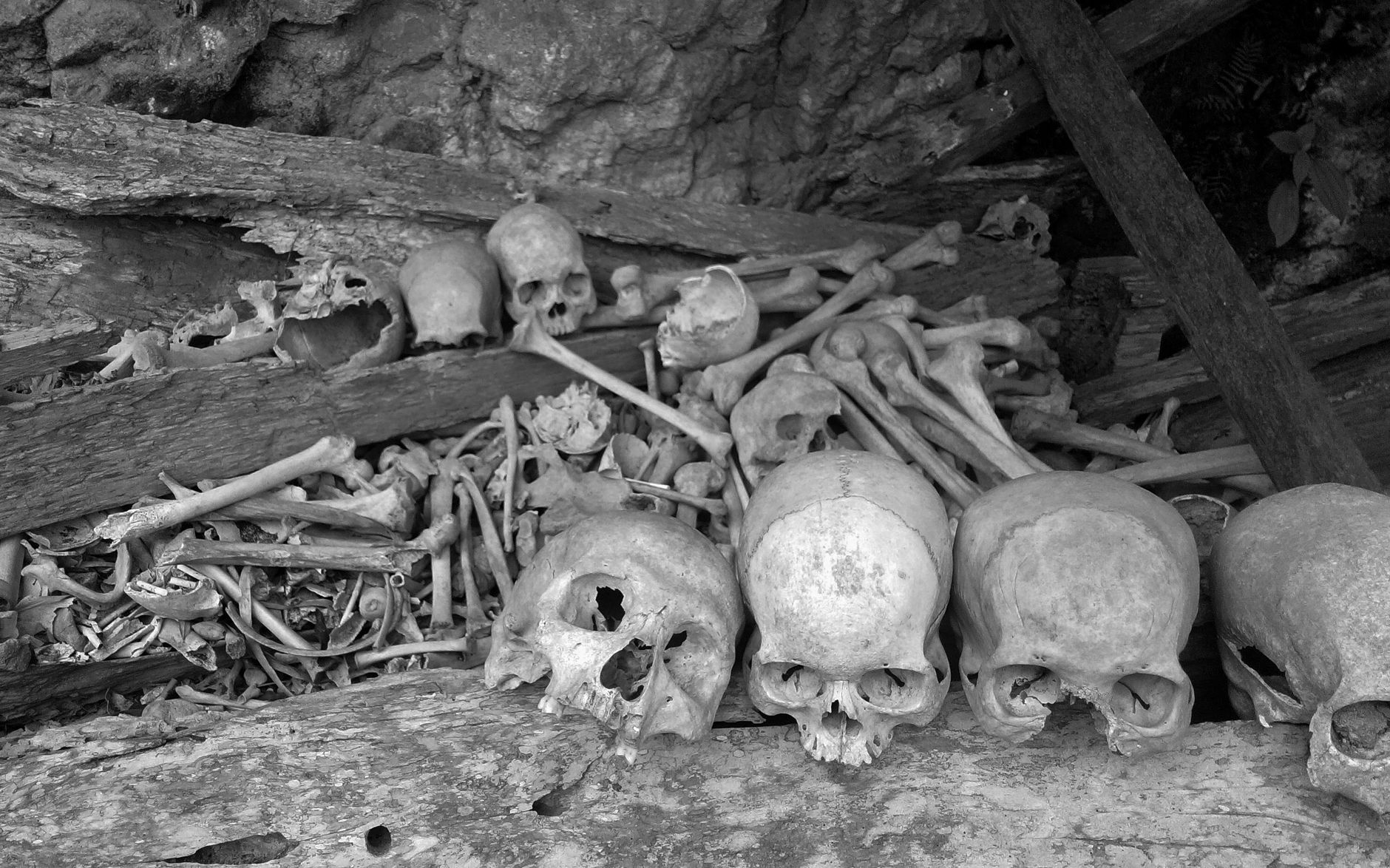
The immediate aftermath of the Black Death was a theater of chaos, trauma, and bizarre attempts at coping. As the mortality rate skyrocketed—killing an estimated 30% to 60% of Europe’s population—the social fabric ripped apart. Farmhands dropped dead in the fields; priests died while administering last rites; entire villages were wiped off the map. The sheer speed of the death toll paralyzed the bureaucracy of the Church and the State.
In this vacuum of authority, fringe movements rose to prominence. The most dramatic were the Flagellants. Bands of robed men, and sometimes women, wandered from town to town, whipping themselves bloody with leather straps studded with iron spikes. They believed that extreme physical suffering was the only way to appease God’s wrath and end the plague. Initially, they were celebrated as holy, but as their processions turned violent and anti-clerical, Pope Clement VI banned the movement in 1349.
Simultaneously, the economy went into a tailspin that inverted the social hierarchy. Before the plague, land was power, and labor was cheap. Afterward, labor was scarce and expensive. Surviving serfs—peasants bound to the land—realized they could demand wages for their work.
Governments panicked. In England, King Edward III issued the Ordinance of Labourers in 1349, followed by the Statute of Labourers in 1351. These laws strictly froze wages at pre-plague levels and forbade workers from leaving their home villages in search of better pay. It was a desperate attempt to turn back the clock on the economy. The attempt failed. The supply and demand equation had shifted irrevocably. This tension eventually boiled over into violent uprisings, most notably the English Peasants' Revolt of 1381, a direct precursor to the end of serfdom.
Surprising Facts Most People Don't Know
While we often focus on the death toll, the secondary consequences of the Black Death hold some startling surprises.
First, the plague accelerated the witch hunts that would sweep Europe centuries later. Before the Black Death, the Church generally viewed magic as superstitious nonsense. However, when the plague raged, theologians struggled to explain why God was punishing the innocent. They needed a scapegoat. The focus shifted toward specific targets, ultimately providing the theoretical framework for the demonization of "witches" during the Renaissance and Reformation.
Second, the pandemic dramatically improved the standard of living for the survivors who remained. With so much land abandoned and up for grabs, meat and grain became incredibly cheap. Archaeological evidence shows that the generation born after 1350 was, on average, significantly taller and healthier than their parents. They had better diets and consumed more protein, thanks to the surplus resources left behind by the deceased.
Third, fashion changed forever. Before the plague, sumptuary laws strictly dictated what you could wear based on your social class. The labor shortage gave the working class disposable income. Tailors began creating shorter jackets (the ancestor of the modern suit) because they required less fabric and were more practical for the new, active lifestyle of the working class who were now traveling for work. The button also exploded in popularity during this time, allowing for tighter-fitting clothes that showed off the physique, a stark contrast to the loose robes of the past.
Impact and Legacy
The legacy of the Black Death is the foundation of the modern era. The most significant consequence was the collapse of the feudal system. Landlords, desperate for tenants to work their fields, were forced to offer better terms and rents. Serfdom gradually withered away, replaced by a system of paid labor and cash rents. This shift created a class of independent peasants and, eventually, a robust merchant class.
The power of the Catholic Church was deeply shaken. The clergy had suffered极高的 losses because they tended to the sick. Furthermore, the church’s inability to stop the plague or provide spiritual answers eroded its absolute authority. This skepticism laid the groundwork for the Reformation a century later, as people began to question religious dogma more critically.
Culturally, the obsession with death led to "Danse Macabre" art, reminding viewers that death comes for everyone, whether Pope or plowman. Yet, this grim focus on mortality paradoxically sparked a renewed interest in the human experience. Realizing life was fragile and could end at any moment, survivors sought to enjoy the world while they could. This shift in thinking helped birth the Renaissance, an era focused on human potential rather than just the afterlife.
Why This Still Matters Today
The consequences of the Black Death explain the basics of how our economy works today. We live in a world governed by the laws of supply and demand rather than rigid feudal obligation. The concept that your labor has value and that you can sell it to the highest bidder is a post-1347 development.
Furthermore, the catastrophe teaches us about resilience and adaptation in the face of pandemics. We saw during COVID-19 how quickly societies can adapt to new realities, just as medieval Europe did. The Black Death proved that massive demographic shocks act as accelerants for change, forcing outdated systems to evolve or break. It reminds us that from great tragedy, profound social and technological transformation often follows.
Quick Facts
- 1347: The plague arrives in Sicily via Genoese trading ships.
- 30-60%: Estimated percentage of Europe’s population that died.
- Yersinia pestis: The bacterium responsible for the disease.
- 1351: The English Statute of Labourers attempts to freeze wages.
- 5 Years: The duration of the initial, most lethal wave of the pandemic.
- 40 Days: The length of time Venice isolated ships and travelers, creating the concept of "quarantine" (from quaranta giorni).
Conclusion
The Black Death was a biological reset button for humanity. It destroyed the rigid social structures of the Middle Ages and paved the way for the modern economy, the Renaissance, and the reformation of the Church. While the loss of life was unimaginable, the consequences forced a reinvention of human society. If the Black Death hadn't reshaped the labor market, would we still be living in a feudal system today? Share your thoughts in the comments below.